
Anthony’s Top 10 Things To Do With Your Puppy
Revised 12/28/2025
By Anthony De Marinis
I originally wrote this blog somewhere around 2018. In that time my dog training has evolved and much of what I do and what I believe has changed and expanded. And because of this, I felt it was time to make some updates to this blog.
When raising a puppy there are many important things to consider as well as many important things to teach and show our puppy's. Moreover, depending on what the goals of the owner are and/or the type of home and environment the puppy lives in will also determine what is most important and what may need to take priority. And lastly, depending on who the puppy is, how he/she perceives the world, the genetic make up and breed of the puppy and the puppy's individual personality also play a huge role in goal setting and what may need to take priority.
For example, maybe you don't want your puppy jumping on the counter or the table in the kitchen, especially if that puppy will be spending a lot of time in that space as he/she is older. Or maybe you go in and out the front door a lot due to packages being delivered, kids coming home from school etc. and you want to make sure your puppy does not run out the front door. These examples are priority for some owners. This owner needs to make sure to prioritize being proactive by setting this puppy up for success so that the puppy isn't practicing these unwanted behaviors right away or developing bad habits. It is better to prevent problems from developing than having to address and modify those issues later.
Maybe you plan to take your dog to work or out on adventures with you. This puppy should start learning to get comfortable in the car as well as being in a car crate or travel crate of some kind while in the car for his/her safety. Or maybe you have plans to have your puppy eventually come with you to the kids sporting events and you need to start safely exposing the puppy to certain environments, sounds and people.
These are just a couple of quick examples of what goals and priorities may look like for some puppy owners. Again, everyone will have their own priorities based on their lifestyles, their goals AND who their individual puppy is.
Part Of The Problem
The problem is that many puppy owners just buy or adopt a puppy and hope for the best. They don't have a plan in place of how to go about certain things to prepare and/or introduce their puppy to whatever the world is that they will be living in. Though each and every puppy is an individual, there are certain steps that can be taken to help a puppy become the best version of his/herself.
Part Of The Solution
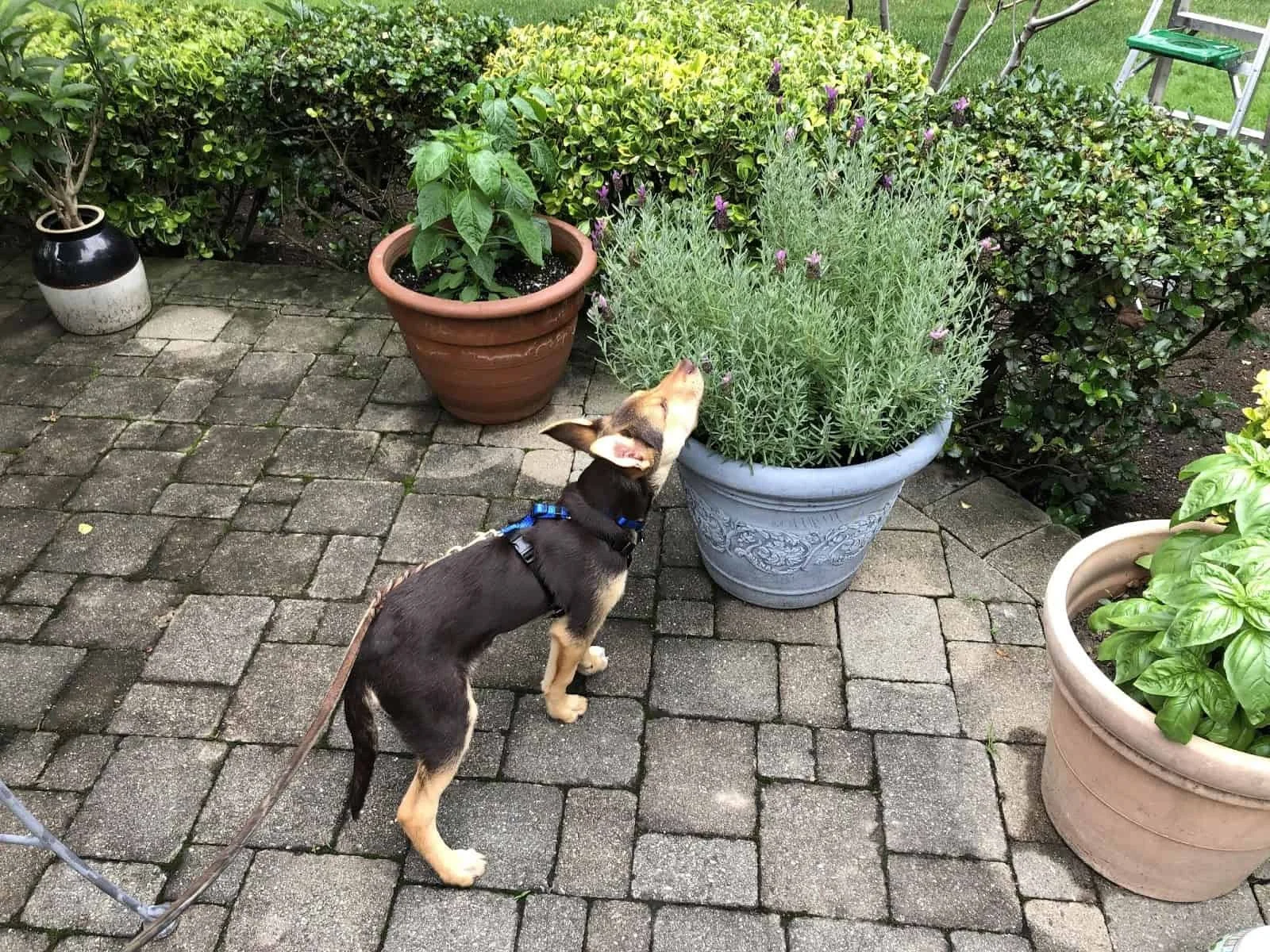
I am constantly asked what are the most important things to teach a puppy. Most owners think of this in terms of skills or obedience training. And although skills training is important in my opinion, there are many others things that encompass the question "what are the most important things to teach my puppy?".
In no particular order, what I have done is written a list of what I think are The Top 10 Things To Do With Your Puppy. This list is based on working with clients and their dogs for nearly ten years.
(Note: Keep in mind that the information here is a general overview of suggestions. What might work for some, may not work for others. And in some cases, certain things may not be appropriate for certain puppies due to a variety of factors, especially those who may have behavior concerns. It is always worth hiring a qualified professional dog trainer to help guide you on your puppy raising journey.)
1. Socialize And Expose Your Puppy
Socialization is the process of introducing a puppy to the world. Many think socialization means to just expose a puppy to a variety of people and other puppies. Socialization and exposure goes way beyond this, so please read this carefully.
The most critical socialization window is somewhere before 12 to 16 weeks of age. This is the most impressionable time in a dog’s life, where your puppy can learn to love, hate and/or be afraid of anything. This is not to say that after this your dog won't learn to love or hate things. Memories, associations, social bonds, and relationships are forged during this time in a dog’s life, which can affect the way puppy interacts with the world. Early experiences have the power to influence a dog’s life. Puppies should be encouraged to explore and investigate their environment and the things in their environment. During this time, puppy should be exposed to a variety of things at the puppy's pace and comfort level.
These "things" can include but are not limited to:
people of all ages (if safe to do so)
meeting polite and social adult dogs for a puppy to learn from
other puppies (if safe and appropriate to do so)
possibly even other animals (if appropriate and safe to do so)
a variety of different environments (indoors and outdoors)
seeing and/or interacting with a variety of objects, textures, sights, and sounds
Tip: Think about your future goals and where you plan to go with your puppy throughout their life with you. For example, if you plan on doing a lot of traveling where your puppy will eventually be staying in a hotel, consider doing so sooner then later and use it as a socialization opportunity. Start introducing your puppy to the world they will be apart of.
That being said, do not just place your puppy into these situations and hope for the best. Make sure your puppy is comfortable and tolerates or even enjoys each socialization exposure. You want these exposures to be as success as possible.
You have to do what is going to be best for your puppy to succeed. This is where hiring a professional can be helpful so that you and your puppy can get some individualized help/advice on this process. Also just a side note, not all trainers are built the same. Some lack experience, others may practice one specific methodology and so on. So make sure you do your homework on what you feel is the best fit for you and your puppy. Anyway, I digress...
Based on who your puppy is, is how you can start to determine what will be the best for your puppy. In general, do not bring your puppy to places that might be scary or just way to overstimulating like loud family gatherings, parties, sporting events etc. Start out in more controlled environments like the homes of friends and family or a quiet public setting at a distance, walk in your neighborhood and so on. As your puppy succeeds you can increase the intensity of the situations you place them in. This will look different depending on how bold, confident and social your puppy is.
The goal with socialization and exposure is not to shelter or withhold experiences from your puppy. It is to help build resiliency and develop a confident and well rounded puppy into a well rounded adult dog that can live in and coexist in "your world" with little to no issue(s). Furthermore, socialization and exposure can help develop a puppy's relationship and trust with you as you are spending time with your puppy.
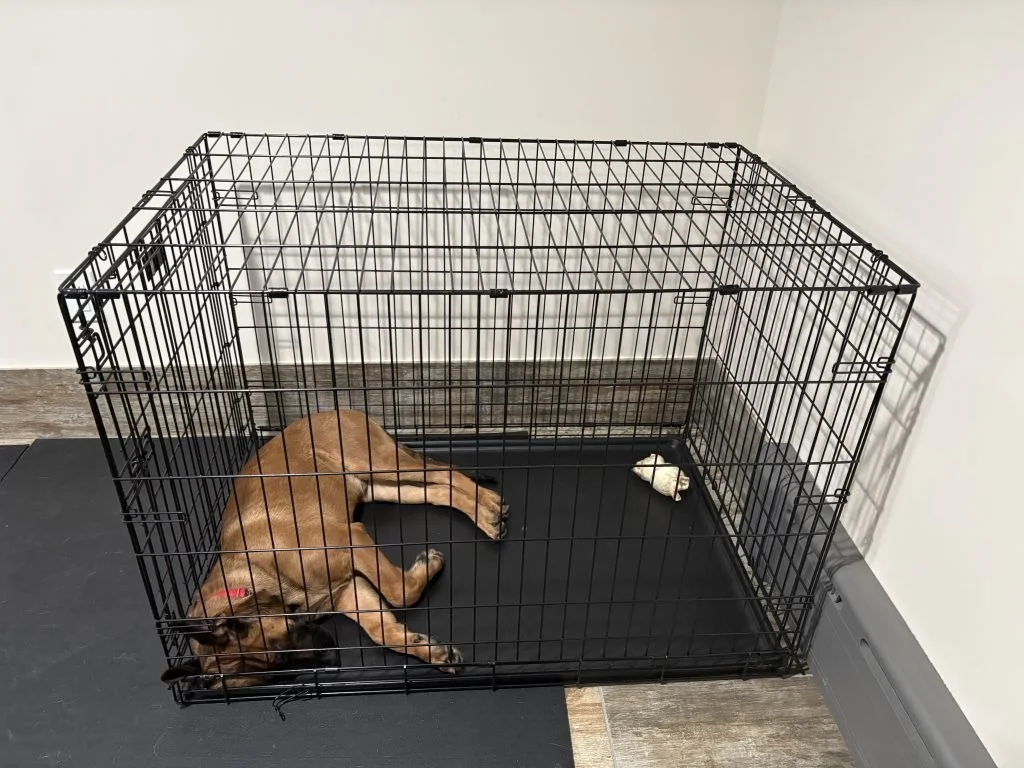
Scooby napping in his crate.
2. Prevent Separation Anxiety And Create Independence
Avoid separation anxiety and isolation distress by introducing alone time gradually. Using a crate and/or play pen during this process is important. Ideally, you must train your dog to enjoy or at least tolerate the crate and pen area. I typically use the crate for sleep and a structured nap throughout the day. The play pen I use as a safe space for puppy to learn to hang out with the family, such as in the family room or kitchen when I cannot have all eyes on my puppy while puppy is awake. The play pen provides a bit more space and freedom compared to the crate which is why I sometimes recommend a play pen. It also provides some form of separation from an owner where the puppy needs to learn to cope with being contained or removed from the owner.
To learn how to crate train and train your puppy to tolerate a play pen, you can watch my instructional video in my FREE puppy guide which can be found towards the middle of the puppy training page on my website. (You may need to do some scrolling to find it.)
For homes that have one or more dogs, it is important to give your puppy alone time without the other dog(s) in the home. You want your puppy to learn to be independent so that puppy does not need to rely on the other dog(s) in the home. You can do this by simply placing your puppy in the crate for structured nap time in another room so puppy is totally removed and alone. You can also use this time to spend time with your other dog(s) so that the other dogs still get individualized time with you. I personally think when owning multiple dogs, one to one time with each dog is crucial and important for both relationship building with you and independence training without the other dogs being around.
And if you do not have multiple dogs in the home, you should still provide structured nap time away from you so that puppy learns to be contained and/or alone when you are home as well as when you need to go out to run errands and so on. Structured naps also allow a puppy to have the opportunity to actually shut off and nap rather than being in the middle of a busy space where the puppy cannot fall asleep or gets disturbed. Remember a puppy is a baby and just like a baby, they need proper amounts of sleep as part of their development as well as learning how to settle within your home.
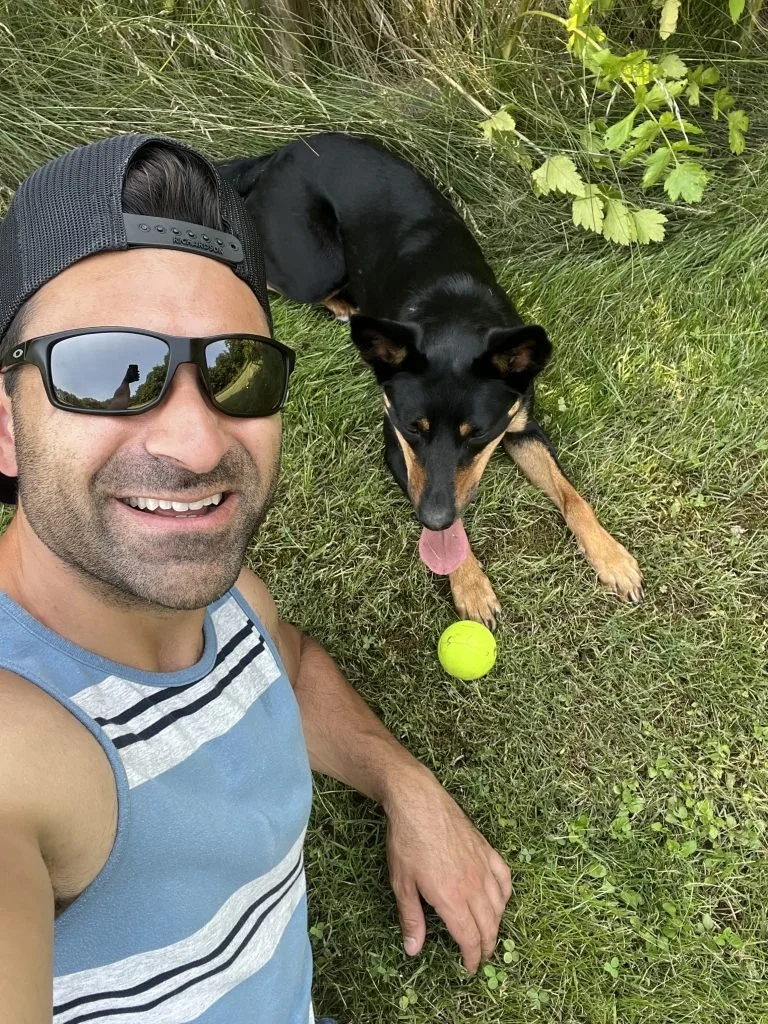
Quest and Anthony hanging out on a nice summer day.
3. Spending Time Together
One of the most important things you can do for your puppy's development and creating a solid relationship is spending time with your puppy. Everything on this list, with the exception of crate training and independence training involves spending time with your puppy. But it isn't enough to just spend time with your puppy by going through the motions. It needs to be meaningful and enjoyable.
And if you have a second or multiple dogs in your home, do not think you are getting off easy. Many dog owners think a puppy will have its other dog friends. They think this is how they will get tired and how they will learn. Although that is partly true, sometimes this can lead to the puppy learning bad habits because of or from the other dogs. Limit the time puppy is your other dog(s) to reduce bad habits or issues from developing. Limiting their time together can help them learn to coexist long term much easier as puppy starts to learn the rules of the home. Instead of relying on your other dog to be your puppy's friend, use that valuable time to spend with your puppy to develop a relationship with you rather than being overstimulated and entertained by the other dog(s).
Spending time together can look like an outing to the park, walk around the neighborhood, going for a hike on a long leash, taking puppy swimming, going on local road trips to different places, playing tug or some silly game, training foundation skills, taking a puppy class, bringing puppy on an errand with you and/or chilling out on the floor petting puppy.
This time together is where a puppy can learn rules, boundaries, develop confidence and resilience and learn about trusting you as their guide and friend in their life. All of these different opportunities and time you spend together are the way to cultivate and develop a long lasting relationship with your puppy. As the saying goes: "Steel is forged in the fire." And similarly this can hold true for raising a puppy.
4. Structured Chewing Time
Puppies need to chew. This is because a puppy is teething. Additionally, puppies use their mouth for exploring and development. Allow your puppy to chew on his/her own chews so that your puppy isn't taking it out on your shoe or other household items.
Providing a puppy with what I call structured chew time is simply providing your puppy with time to chew on his/her own things. I do this multiple times a day. Chewing not only feels good to the puppy, but it is also mentally stimulating. Each dog enjoys different chew toys. Some love Bene Bones, others like bully sticks, some like pigs or cow ears, others like food stuffed toys like a West Paw Toppl. Chewing is a natural behavior for dogs, which is why I like providing multiple times a day for my puppy to chew.
Tip: An extra piece of advice, rotate the chews. Do not leave all of them out all day long. I like to rotate chews so that my puppy has a variety of things to chew on to keep it interesting for the puppy.
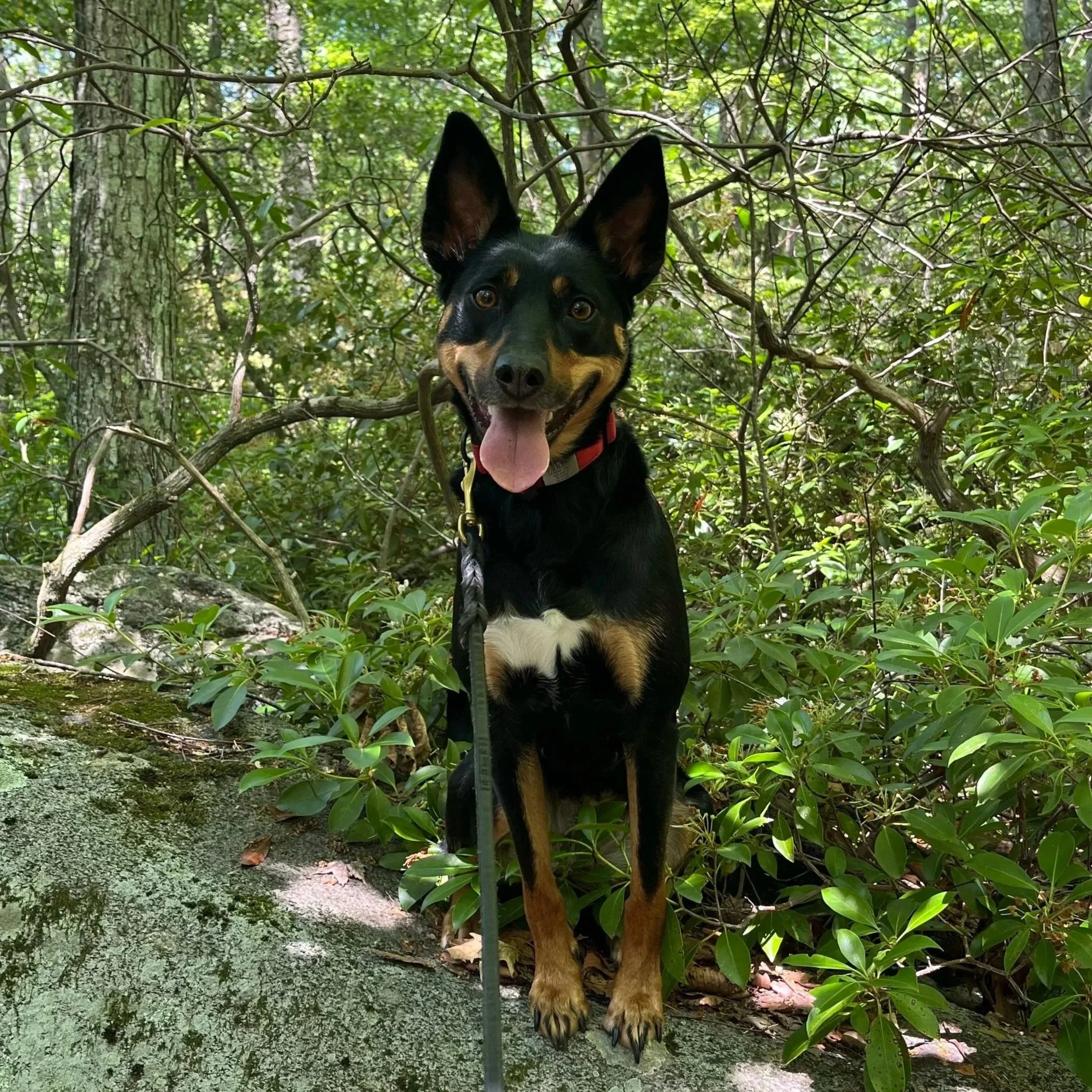
Quest practicing her sit maintain (stay) on a hiking trail.
5. Teach Puppy to Maintain Position
Teaching a puppy to sit or lay down is great! But can your puppy maintain that position until you release him/her? This is essentially an implied stay without actually saying stay. The puppy is to stay in position until they are either released with their release word or until you ask them for another behavior. In the case of a young puppy, I would start out with releasing them quickly so that they understand the idea first.
Teaching a puppy to maintain positions is extremely important as it can build better self control or the buzz phrase, "impulse control". I love teaching a puppy to maintain a sit and down position as we can build on these skills. Take your time when teaching these skills. Once your puppy understands these behaviors well, start to raise the criteria by adding some duration and distraction. Here is an instructional video on how I teach a sit maintain so that you can see what this looks like.
The reason I have added this concept to my list is because a lot of puppy owners actually teach these behaviors prior to hiring a trainer. The only thing they don't do is teach the puppy to maintain their position when teaching these skills. So rather than teaching these skills as a random trick, teach these skills with additional goals so that they can become more useful down the road.
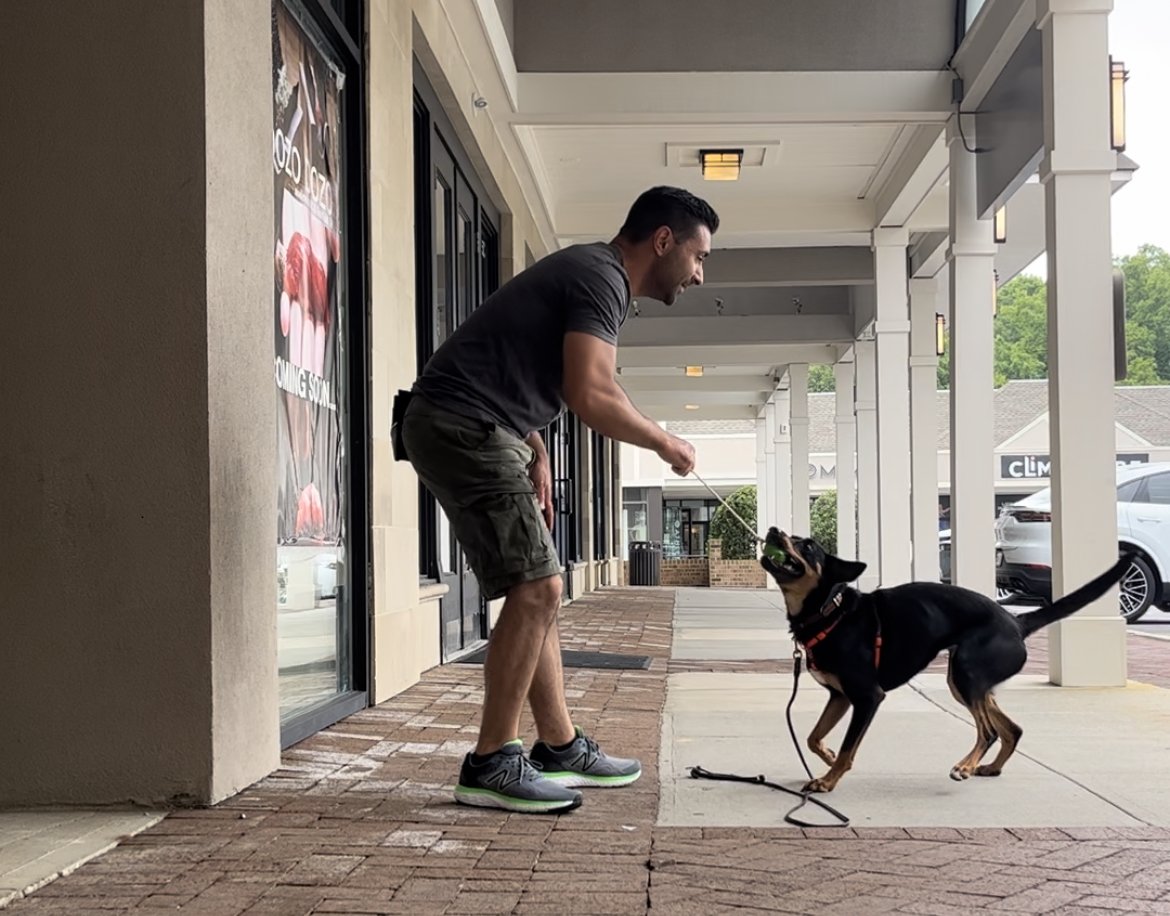
6. Play Is Powerful
Play with your puppy! Play can be such a powerful and valuable tool in developing a relationship and connection with your puppy. It can also help build motivation, confidence, it can be biologically fulfilling and it can be used as a reward in training. Play can look like a variety of things. There is Toy Play, which is where you are playing with your dog using a toy of some kind. This can also involve chasing and/or tug of war or catching in the air. Then you can also have Social or Personal Play, where you can use your hands and body to play with your dog. Play can also involve being chased or chasing your dog.
The main thing about play is that it needs to be fun and enjoyable for your dog! Find out how your puppy likes to play. As your relationship grows and develops and as your puppy grows, your puppy's play style may change and the things he/she likes may change as well for one reason or another. To learn more about play, you can check out my blog on Using Play With Food & Toys As Rewarding and my blog How To Tug Safely.
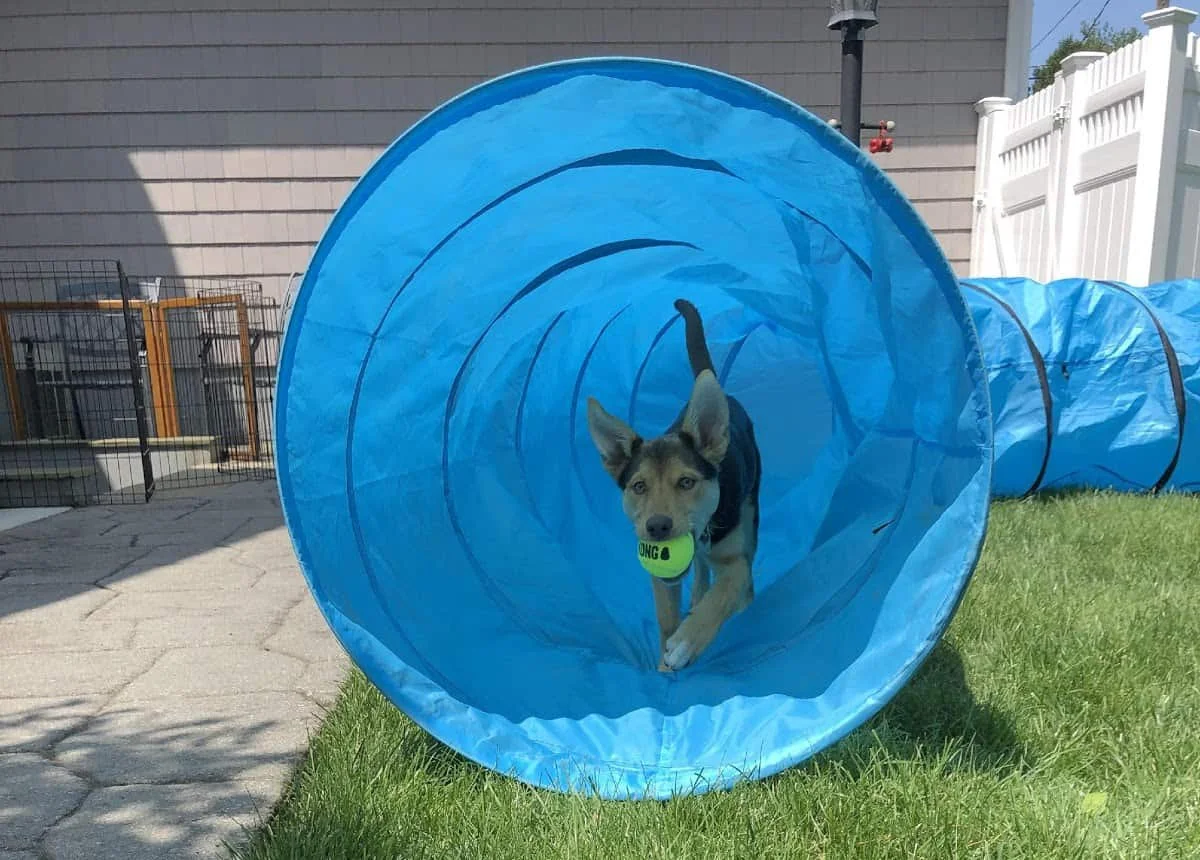
Puppy coming when called
7. Teach a Recall
Teach a recall that is fun! There are many ways to teach a puppy to come when called. I personally use a variety of games and exercises to teach this to make it fun and enjoyable for the puppy.
Recall training is where you can use play as a reward to make coming when called the best thing ever. You can do recalls such as a On Leash Recall, where you are using a leash to guide the puppy back to you. You can check out this video of mine to see what it looks like. You can also teach a Treat Toss Recall, where you toss a treat for puppy to chase after. Once the puppy gets the tossed treat and consumes it, call puppy to you ("Fido Come") and start running away. Puppy should start chasing after you as you start running away from him/her. When puppy arrives to you, you can reward with food or toys for a job well done.
Tip: Once puppy starts understanding how to maintain a position (like a sit maintain) and starts to understand their recall, I personally like teaching a recall with an end behavior. What I mean is when I call a dog to come to me, I would like them to sit in front of me or do some other behavior where the dog must maintain their position until released or asked for another behavior. This is what I do with my own dogs because I want them to learn to come to me when called and wait until I give them further instruction. This prevents a puppy from learning to come to you, getting their reward and running away from you after they get rewarded.
8. Body Handling, Restraint and Grooming
I find that many puppy owners assume their puppy will understand to stay still while they are being handled, restrained and/or groomed. This couldn't be further from the truth. To make matters worse, many owners just start grabbing, poking, restraining, brushing or doing whatever in order to just get the job done.
My advice would be to start being more thoughtful by introducing body handling, restraint and/or grooming concepts. Especially is you have a dog with a coat that needs to be cleaned and groomed regularly as this will be a life long caring process. You can do so by touching a body part such as the ears and then reward them. You can even label each body part so that the puppy starts to understand and predict what is about to happen when you say it. You can do the same for full body restraint and grooming with a brush etc. Hiring a professional trainer for something like handling skills can be very helpful to prevent any issues from coming up or getting worse.
9. Enjoy Riding In The Car
For many puppies, the first few car rides they have in their life may lead to something scary or stressful. For example, the first time they get picked up to their new home as they don't know where they are going. Then to their vet appointments to get examined or even vaccinated which isn't the most pleasant thing for a young puppy.
What happens as a result is the car equals something potentially negative. Make car rides an enjoyable event. This can be driving to a local park to take puppy out on a walk to explore. (Assuming the puppy isn't a totally nervous wreck in new places etc.) Car rides should equal something enjoyable.
Tip: When traveling with dogs, I personally like traveling with dogs in crates as it is safer than allowing them to be loose or free in the car. Especially if you stop short or get into an accident as the puppy could become a projectile. You can always place a safe chew item or two in the crate if you are just driving around locally so that puppy could potentially become distracted by the chew item(s) and less focused on the movement of the car.
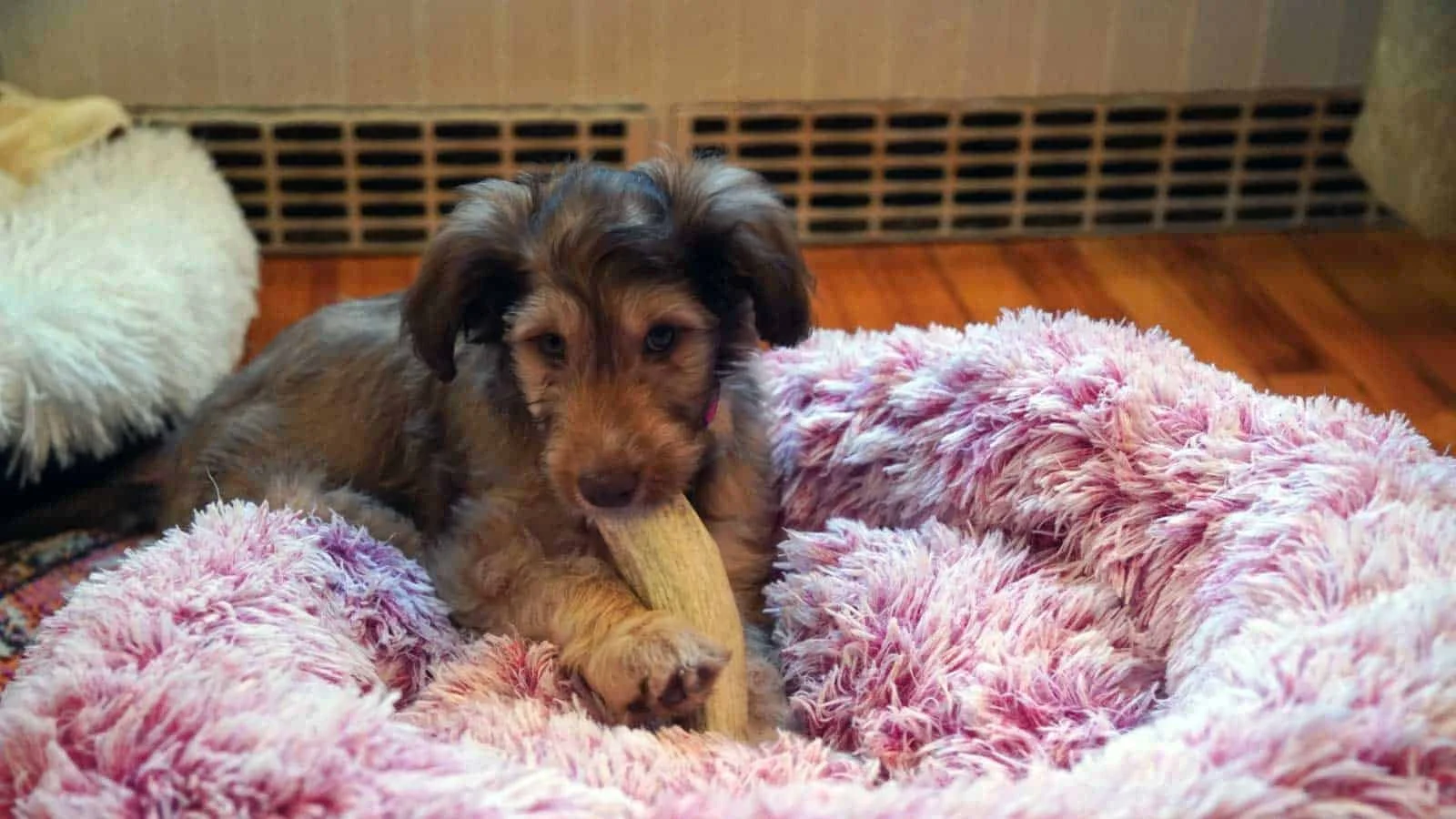
10. Teaching Drop It
The reason this skill is on my list is because one of the biggest complaints I get from puppy owners is one of the following: "My puppy steals everything" or "my puppy runs away from me and I start chasing him around my house".
To prevent these issues from occuring you need to first puppy proof your home. You can check out my blog on how to puppy proof your home. Next, when puppy has something in his/her mouth, rather than going over and snatching the item out of your puppy's mouth or chasing puppy around the house, start teaching drop it. The only time you will see me pry open or swab a puppy's mouth is if they have something dangerous or toxic to them or something valuable to me. Otherwise, I use the opportunity as a chance to start practicing drop it. The reason for this is because I have many puppy owner that hire me when the puppy starts learning to run away or avoid the owners when it has an item in his possession or when the puppy starts to get possessive of the item(s) it takes. Preventing this from being a game or developing possessive types of behaviors will save you a headache later. You can learn more about how to prevent these issues as well as why stealing items from puppy and chasing a puppy can cause more harm them good by reading my blog.
The way I introduce drop it to a puppy around the house is pretty simple. When puppy has an item in his possession, say your word "drop" and then immediately toss a couple of treats directly at puppy. Even if the item is still in his mouth, toss the treats at puppy anyway. Later puppy should start understanding that "drop" means to let go of items in his possession. This prevents a puppy from constantly running off with the item or having to chase puppy around the house. If chewing on your household items or stealing things and running off are issues you are dealing with, I suggest teaching a drop it as one of your strategies to address this. Here is a quick video on how I teach this concept.
I hope these 10 suggestions help you with your puppy!
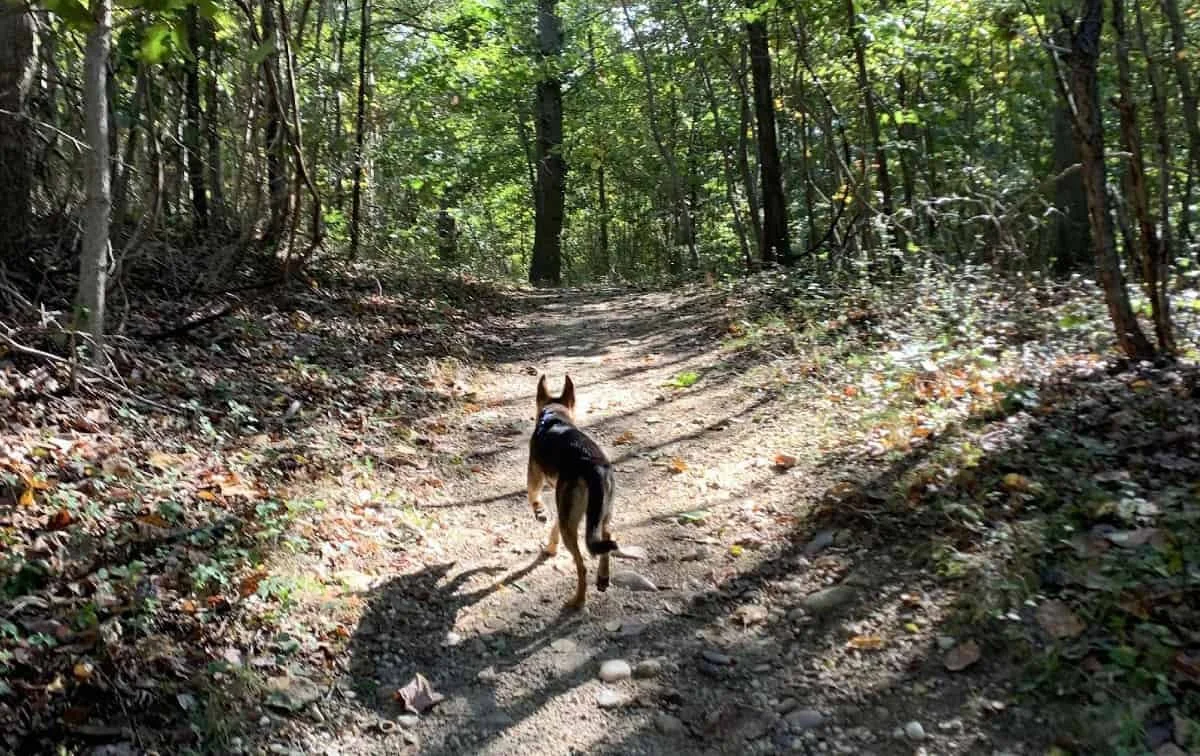
Puppy Journey hiking at our secret spot.
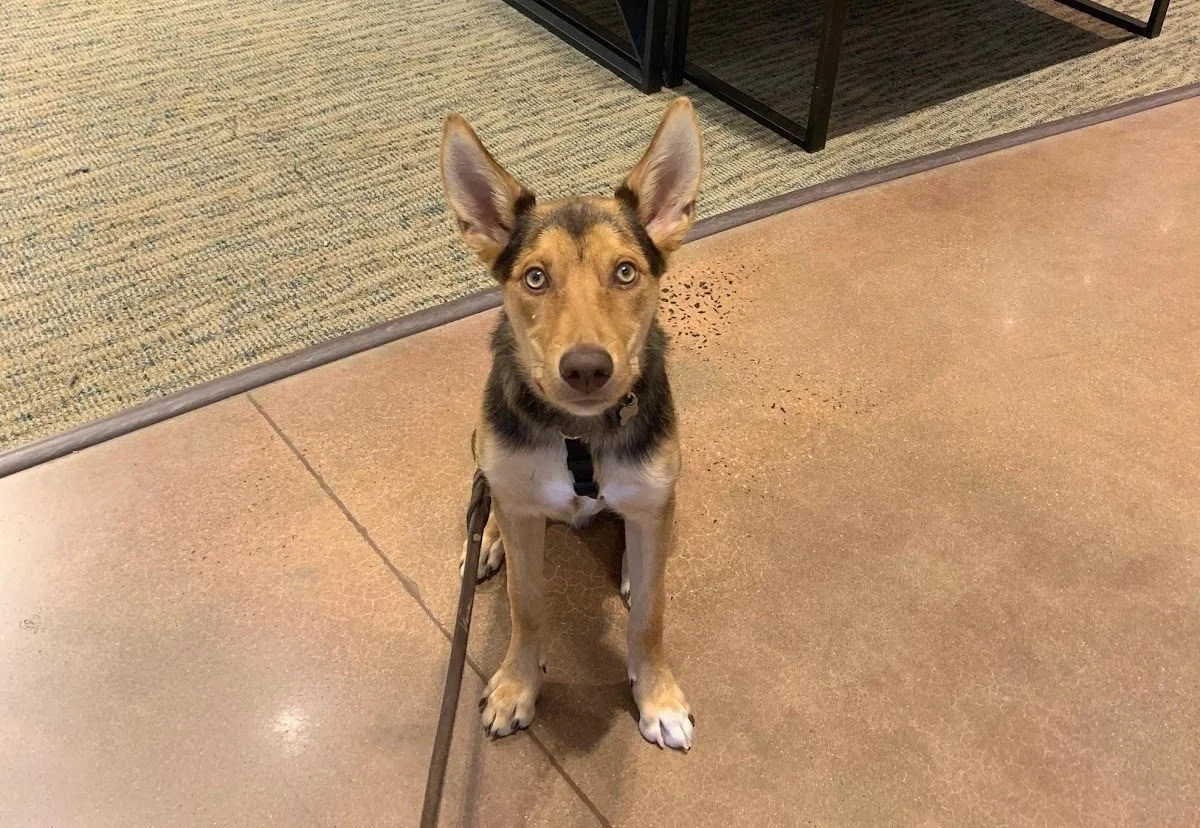
Puppy Journey visiting Bass Pro Shops
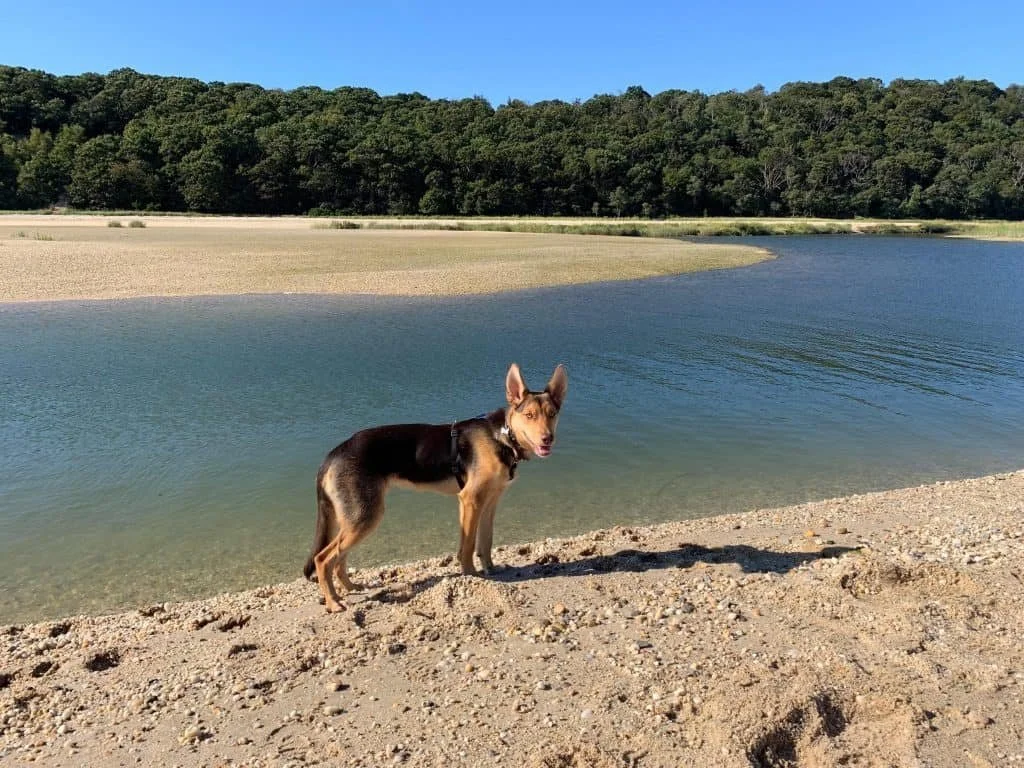
Off leash puppy hiking on the beach
About Anthony De Marinis
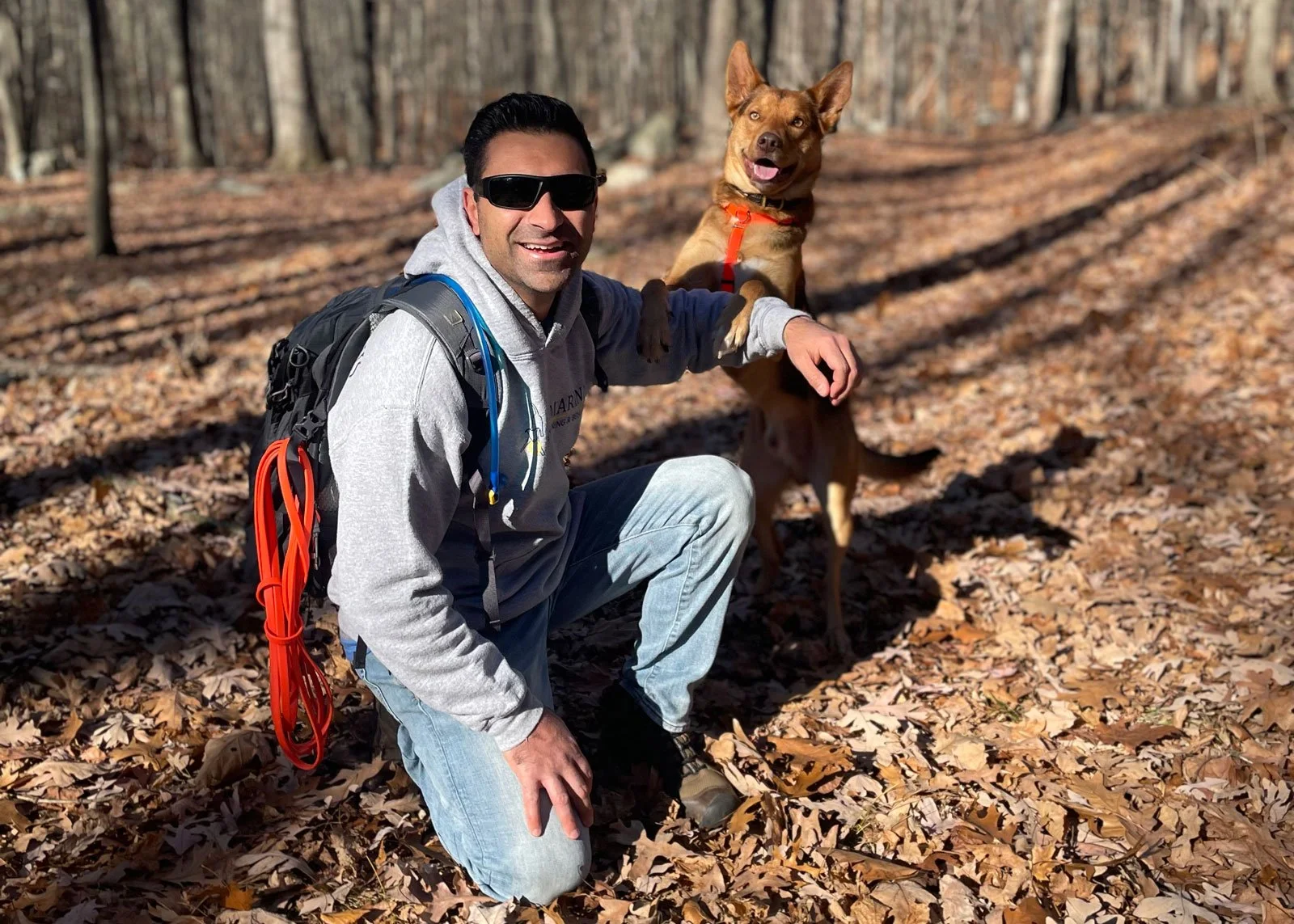
Anthony and Journey hiking the Hudson Valley
