
Dog Training Methods and Beliefs- What are the differences?

Anthony’s dog Quest!
By Anthony De Marinis
Revised on 5/11/25
Dog training has become a very popular and in-demand business. From puppy training, to basic skills training, obedience and manners training, to behavior modification for aggression, reactivity, fear and anxiety; dog owners are seeking dog training help like never before.
There are many different methods and philosophies regarding dog training and behavior modification. This surprises a lot of dog owners, as many think that there is only one way to train a dog. In fact, there are three main training methodologies or “camps” that trainers may consider themselves in.
Before I list these three groups, it is important to note that within each methodology or “camp,” there is a spectrum. Some professionals may be more extreme in the way they practice or what they believe.
I also want to say that categorizing training and behavior professionals into a specific "camp" has become a hot topic lately because many of us do not fully agree or identify with each group. Due to the extremisms in each of the dog training "camps" there are many professionals who feel like outlier's because they may see benefits to a variety of training approaches. I myself am one of those outliers in the "positive reinforcement" and "balanced" dog training communities as I personally do not feel like I fully identify with either of the two. Though I mainly practice positive reinforcement and reward based dog training methods, there are plenty of things that I do not fully agree with within that philosophy.
I am not writing this blog to further create a divide among dog training and behavior professionals nor is it intended to insult anyone and their choices on training methods and beliefs. This blog post is for the consumer, so that the consumer/client can make an informed decision on what they feel is best for themselves and their dog during their search for professional help.
The Three Camps
In no particular order the three main training methodologies are:
Positive reinforcement (sometimes referred to as force-free). Positive reinforcement-based training focuses on teaching the dog what to do, rather than what not to do, and it focuses largely on reinforcing behavior we like in order to teach a dog, using treats, play, praise, environmental rewards or other things the dog finds enjoyable. These trainers avoid punishment of unwanted behaviors, instead choosing to focus on rewarding wanted behaviors and setting the dog up for success via changes to and management of the environment. This methodology also heavily focuses on who the dog is as an individual, a dog's genetic makeup, a dog's emotional state and wellbeing, building trust and creating a deep relationship with a dog. Positive reinforcement-based methods do not include correcting or punishing behavior, including the use of training tools such as choke chains, prong collars, and electric collars. Positive reinforcement trainers will generally use harnesses, flat collars, and head halters. It is important to note that there are extremes to this group, just like all the other groups. I have observed that those who label themselves specifically “force-free” are generally on the more extreme end of the positive reinforcement methodology. Some trainers within this group do not believe in ever teaching a dog “no” or setting boundaries that could potentially be aversive to the dog.
Balanced. There is a wide variety of training styles and beliefs within this group. Balanced trainers believe in using positive reinforcement-based techniques. (I personally find that the really good ones tend to mainly use positive reinforcement techniques in most of their training.) Balanced trainers also believe in using different forms of punishment when necessary to teach, stop, manage or correct a behavior. Balanced training professionals are willing to use a wider range of training collars and other tools, but this will vary depending on the training professional and what they personally feel comfortable using or not using. Tools that a balanced professional may use include: slip leads, prong collars, Starmark collars, shaker cans, air cans, spray collars, and electric collars. Just like positive reinforcement trainers, balanced trainers will also use harnesses, head halters, and flat collars. And just like positive reinforcement professionals, balanced professionals use treats, play, praise and environmental rewards to teach and reinforce desirable behavior. Similarly to positive reinforcement professionals, most balanced professionals focus heavily on who the dog is as an individual, understanding the dog's genetic makeup and a heavy emphasis on creating a relationship and connection with a dog. It is important to note that there are extremes to this group, just like all the other groups. For example, some professionals may use punishment more than others believe it is necessary, and some may rely more heavily on positive reinforcement.
Correction-based (sometimes referred to as “traditional training” or “coercive training” or “old school training,” especially among the professional dog training community). This is the type of training you see in celebrity dog trainer Cesar Millan’s TV show, especially the early TV shows he had. These training methods generally involve training and modifying behavior using almost solely corrections and punishment. Trainers from this methodology use little to no reinforcement to teach a dog what to do or how to do it. This methodology does not generally focus on the dog's emotional wellbeing. Generally this methodology does not focus much on the dog as an individual being, nor does it focus much on developing a deep relationship with a dog. Correction-based methods focus on the concept of "Do it now damnit" and believe that dog's are trying to be the alpha or dominant, so owners are generally taught how to be the alpha instead. It is important to note that there are extremes to this group, just like all the other groups. Some professionals may be extremely heavy-handed and rely on especially harsh punishments, which can result in additional behavior issues in dogs.
As a side note, if you want to learn how to find a dog trainer, behaviorist or behavior professional, you can check out my blog called, Do I Need to Hire A Dog Training and Behavior Professional With Credentials?.
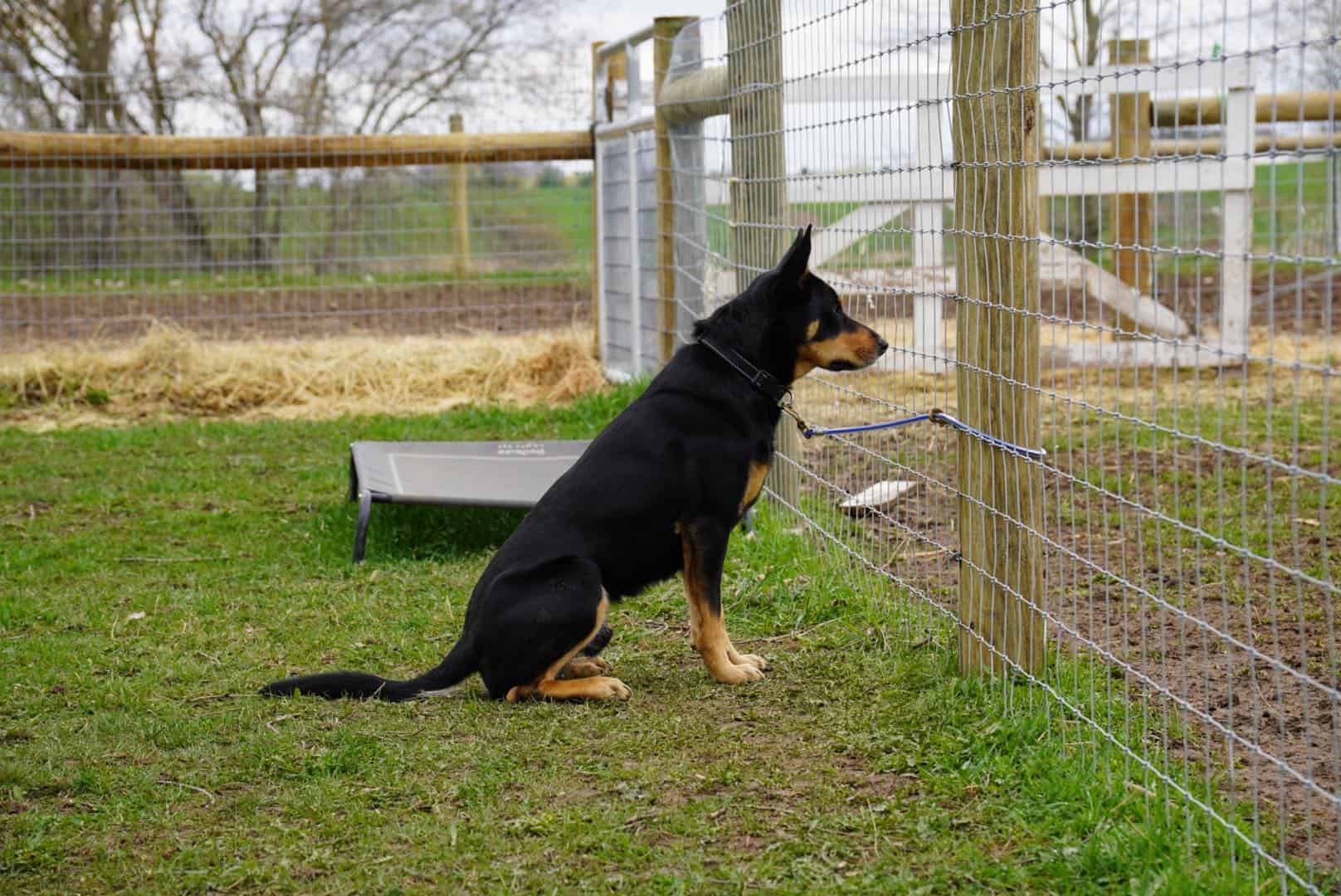
Jynx waiting his turn to get on the training field
Least Intrusive, Minimally Aversive- LIMA
There are many professionals who actually fall in between positive reinforcement and balanced training methods. Though there isn’t a formal label for this group or “camp,” many follow the philosophy of LIMA (least intrusive, minimally aversive). LIMA takes a more evidence-based and pragmatic approach when looking at the individual dog and family. This gives professionals the opportunity to meet the dog and owner where they are. Though not set in stone, the use of LIMA generally starts with using the least intrusive approach possible for the individual dog and situation.
Before I explain the philosophy and/or approach of LIMA, I should say that recently some of the main dog training and behavior organizations that represent and/or certify dog training and behavior professionals have since removed or abandoned LIMA. A lot of this is due to the fact that the dog training and behavior community has so much of a divide, just like politics unfortunately. For example, many professionals in the positive reinforcement community feel that if you practice a LIMA based approach you are considered a balanced dog trainer, whereas other positive reinforcement professionals don't feel this way at all. And because of this, many positive reinforcement trainers do not want to be identified or mixed up with professionals who follow LIMA. Again, because there is such a broad spectrum in how many professionals may choose to practice, it is hard to categorize so many professionals. This is one of the main reasons some of the certifying organizations are choosing to move away from the term LIMA, even though many professionals actually follow it in some shape or form.
LIMA allows professionals to be objective and critical thinkers who decide when and how to use a variety of training and behavior modification techniques and interventions based on the individual case and situation. Just like with humans, dogs learn, work and are motivated in different ways. LIMA lets us decide what is the best approach and methodology for the dog.
Most LIMA-based professionals consider many things when trying to help dogs and their families, which include but are not limited to:
The individual dog (who the dog is, including their emotions, their joys, their fears or anxieties, the way they learn etc)
The individual family and household
The environment
The dog’s breed and breed traits (genetics)
Where the owner and dog are at that time (where they are at in training, their relationship, etc.)
The training skills, manners, and rules that the dog already knows
The amount of time and effort the owner/family has already put into training and behavior modification
The quality of life of the dog and the owner/family
The dog’s routine and day-to-day living situation
The relationship and connection the dog and owner have
The owner or family’ “emotional bank account” (meaning how the owner is feeling and where they are personally at with what they feel about their dog).
(Note: This does not mean other training methods do not consider the things listed above.)
The items on this list help professionals determine the best approach to addressing behavior issues for both the dog and the dog owner, as each and every dog and household is unique.
LIMA was originally developed by Dr. Steven Lindsay and can be found in his book, Applied Dog Behavior and Training. As it has been changed and modernized over the years from Lindsay's original framework, different versions of LIMA have evolved. These differences can be highlighted in the position statements of organizations that support the use of LIMA. For that reason, I have listed here the three certifying training and behavior organizations that have LIMA position statements. Up until recently, these organizations had all followed a form of LIMA. Recently both the IAABC and CCPDT have removed LIMA from their practices or position statements to try to better represent their organizations as a whole. I encourage you to review them to decide which organization and beliefs align with you and your ethical framework as I do not believe it is my job to tell you what to believe.
The International Association of Animal Behavior Consultants (IAABC)
The International Association of Canine Professionals (IACP)
The Certification Council for Professional Dog Trainers (CCPDT)
Choosing a Dog Trainer and Behavior Consultant
To say that one training method, one training tool, or one training approach is right all the time is like saying one way of practicing medicine is right all the time or that there is only one way to view art or only one way to bake a cake. I personally just don’t think there is “one way” to do everything all the time.
What I have learned and continue to learn is that competent dog trainers and behavior professionals will always look at the big picture of the dog, the family and the situation presented to decide what is going to be the best approach. Though these dog training and behavior organizations are here to help to advance and represent the dog training community as a whole, their position statements are simply that. For example, one of the organizations I am certified through has changed their position statement on dog training and behavior modification three times in the last five years which I think says something.
The reality is, dog training and behavior modification strategies, protocols and concepts have not really changed in that time. Professionals themselves may have changed their personal approaches and practices and many continue growing and advancing personally and professionally, as they should; but the approaches and strategies themselves have not. To be honest I think a lot of what has changed is more the marketing around dog training. Many big name professionals or big name social media trainers are getting better at marketing and selling their magical special approach as if it is some "new dog training approach". Don't fall for this.
At the end of the day, finding a dog trainer and behavior professional is a highly individual decision. And the reality is, regardless what method a dog trainer follows, as the consumer just remember that each dog training group or camp has talented professionals and each group also has untalented and unskilled trainers. And to be honest, as a consumer it is hard to distinguish who is a skilled and unskilled dog trainer or behaviorist. Understanding a trainer’s methodology is a great first step in deciding whether to hire them to help you with your dog’s behavior.
If you want to learn more about deciding how to hire a dog training and behavior professional, you can check out my blog, Do I Need to Hire A Dog Training and Behavior Professional With Credentials?.
Follow Anthony On:
About Anthony De Marinis

Anthony with his dog, Journey hiking in the woods
