
How To Safely Play Tug With Your Dog- How To Play Tug And The Benefits of Playing Tug With A Dog
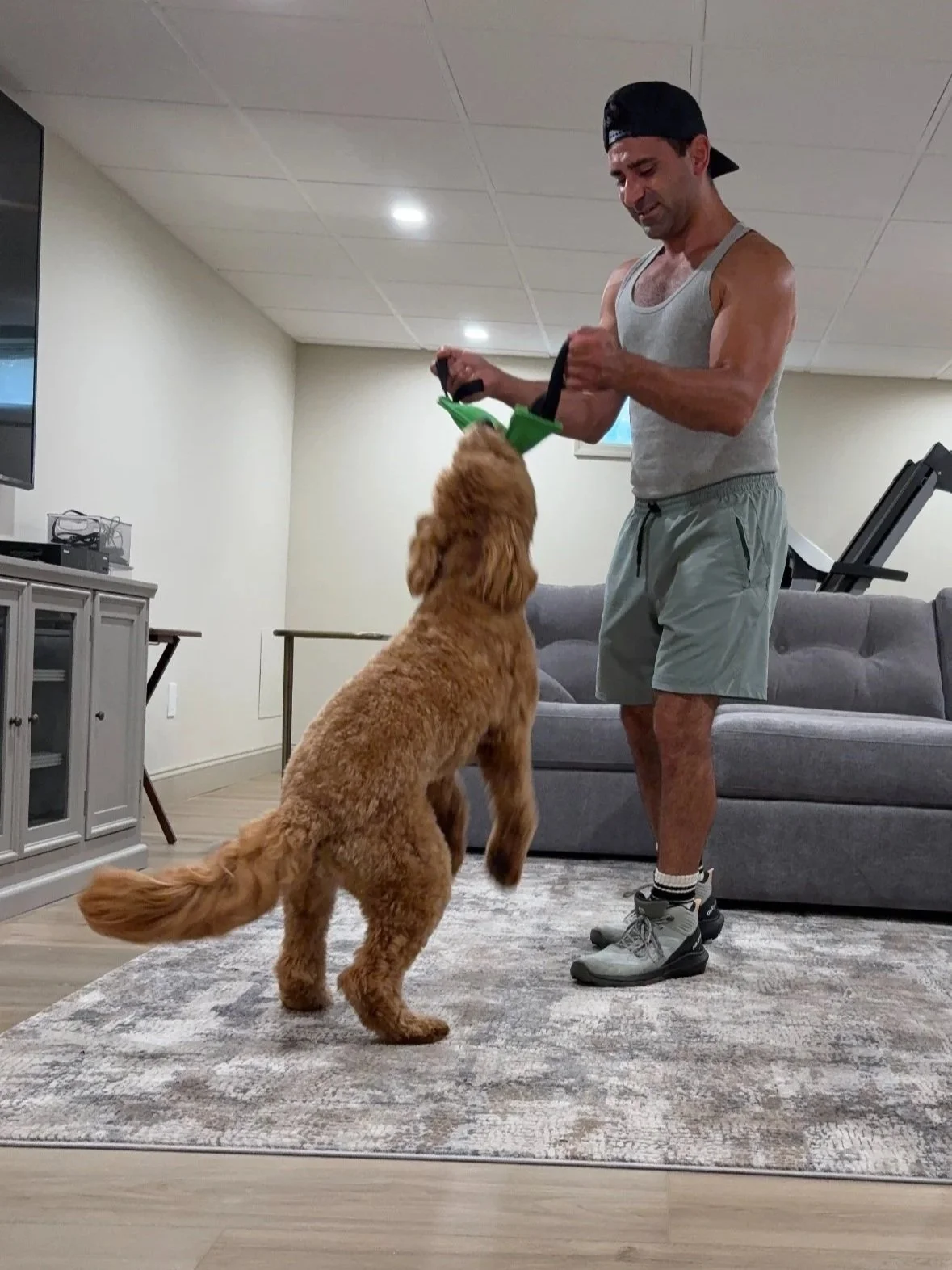
Anthony and Hudson playing tug of war together.
Revised on 12/29/22
By: Anthony De Marinis
Is it okay to play tug or does playing tug cause a dog to be aggressive?
I am constantly asked if playing tug causes aggression. The answer to this is NO (in capital letters!). As a matter of fact, I encourage you to play tug with your dog and puppy because it has many benefits. However, learning how to play tug safely is VERY important in order to make it enjoyable and motivating as well as knowing how to play it safely so that it is you do not accidentally injure your dog.
Again, contrary to what some professionals may still believe, playing tug does not cause aggressive behavior. In fact, playing tug is a great way to teach a dog self control. Furthermore, tug can help develop a strong relationship with dog and person. Often times tug is a foundation exercise in puppy training because of the many benefits. Many people who compete in dog sports or use their dog for work such as scent detection, K9 Units etc. rely on playing tug with their dog, as it can be a very valuable reward. For example, my dog Journey, is not very motivated to work for food rewards. Instead, he is motivated to work for toys and play such as fetching and tugging. Most of his training has always been rewarded with toys and tugging. Watch this video of Journey earning a tug reward for coming when called.
It is important to note that some dogs get more intense, more easily aroused and/or possessive and any or all of these can be activated by playing tug with your dog. Playing active games like tug of war can intensify that arousal and the behaviors that come with it. If you feel playing tug intensifies unwanted behaviors for your dog in a way that makes your uncomfortable, I suggest hiring yourself a professional dog trainer. Because no dog trainer is the same, and because there are many different dog training styles, methods and certifications, I actually suggest a couple of things when hiring yourself a professional dog trainer to help teach you how to play with your dog:
Firstly, when seeking help from a professional dog trainer, see if they have any videos of themselves playing with dogs! It sounds so simple, but many professionals don’t seem to post their work. With dog training being an unregulated industry in the United States, their are many “dog trainers” or people who call themselves dog trainers that are frauds. In today’s day and age with such with easy access to video cameras on cell phones and social media, it is easy enough to get some video footage. I suggest searching the dog trainers social media pages such as Youtube, Facebook and Instagram to see video(s) of the dog trainer playing with dogs. If you enjoy and like the way their play style with dogs looks then contact them! Video can give you some insight to a dog trainers work.
If a dog trainer has multiple videos with their dogs or client dogs on play and/or using play and toys as rewards in their training, this is another sign that this trainer may have a decent amount of experience to provide you with tips and suggestions on how to play tug with your dog.
Does the dog trainer mention or advertise somewhere on their website that they use play and/or tug to train and work with dogs? For example, on my website under the “Our Dog Training Approach and Philosophy” section, I mentioned the use of play as one of the main ways I train and work with dogs.
If the dog trainer competes in dog sports, this can potentially be a plus because dog trainers who do dog sports are more likley, though not always, to have experience using toys as rewards and knowing the nuances to different play strategies with dogs. Dog trainers that participate in dog sports generally do so as it is a serious hobby that helps elevate their skill level and goals they want to achieve as a dog trainer. And again, these trainers generally will post videos of their work in many cases because they want people to see what they do and what they enjoy doing with their own dogs.
Just ask! Reach out to local dog trainers that you are interested in hiring and ask them if play skills and tug are something they can help you with. If they say yes, the next step might be to ask them if they have any videos of their work posted on their website or social media of they playing with dogs. The reason I suggest this is because some dog trainers really have no club on how to play with dogs and how to capitalize on using play as a reward in training and how to use it to develop a relationship as well as how to use it to help modify a dog’s behavior. So what I am saying is talk is cheap! Let me see it for myself! Part of this comes from a place of knowing that I have dog trainer colleagues who just don’t have the proper skill set in this arena.
Note: I want to attempt to be respectful and say that there are definitely good trainers out there who do not post many videos of their work. I don’t want you thinking someone must post a lot of videos in order to be a good trainer because that is not true at all! I have a friend and coach for example who is one of the people that taught me some of my play skills and she person never posts videos of her work. But, this person shares many of her achievements in dog sports competing a very high levels.
Anyway, moving on…
If your dog is a known resource guarder, a dog who gets possessive and/or protective of items, then in some situations playing tug could be difficult without professional guidance. In some cases playing tug might be problematic, depending on the severity of the behavior. In those cases, playing tug may not be a good idea, but again, this is dependent on the individual dog. And again, it could be as simple as hiring a professional dog trainer to help you and your dog work through it by coming up with some rules and strategies. Learn more about resource guarding.
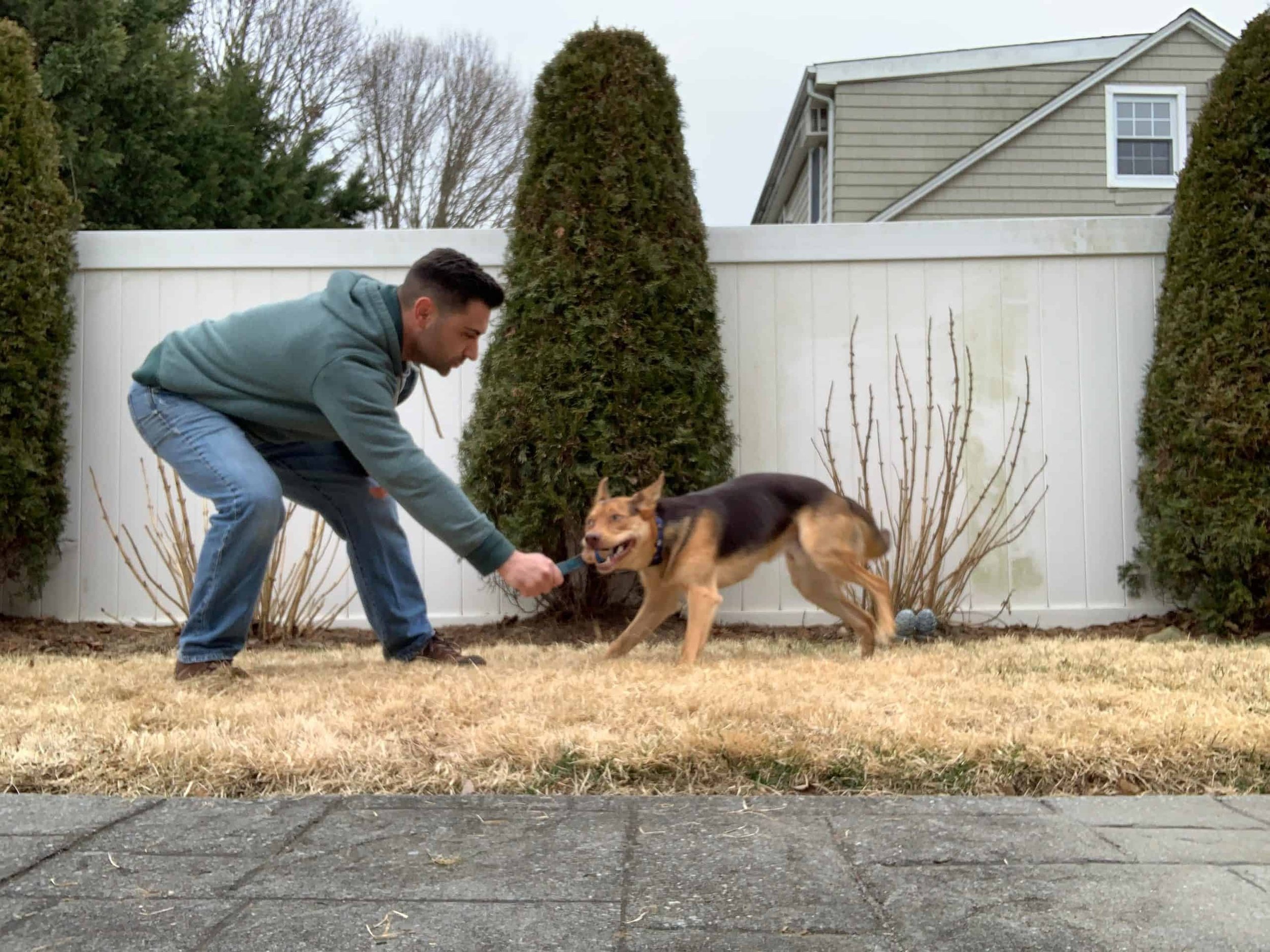
Journey and Anthony tugging.
WHY IS PLAYING TUG BENEFICIAL?
It builds and strengthens an engaging relationship between dog and owner.
It provides great mental and physical enrichment.
It is helpful in teaching a dog self control.
It can be used as a reinforcer/reward for a job well done in training and behavior modification.
It can be used and/or be apart of a behavior plan to modify certain behaviors/behavior issues
It can be strategically used to redirect behavior such as puppy mouthing (though I personally am not a fan of this as it can also accident reward other behavior.).
It can help build confidence for some nervous dogs.
It can be an outlet for pent-up energy or stress, which can lead to unwanted behaviors.
It can build a dog’s motivation to work/learn.
I am sure there are other reasons that are not coming to me at the moment as I write this…
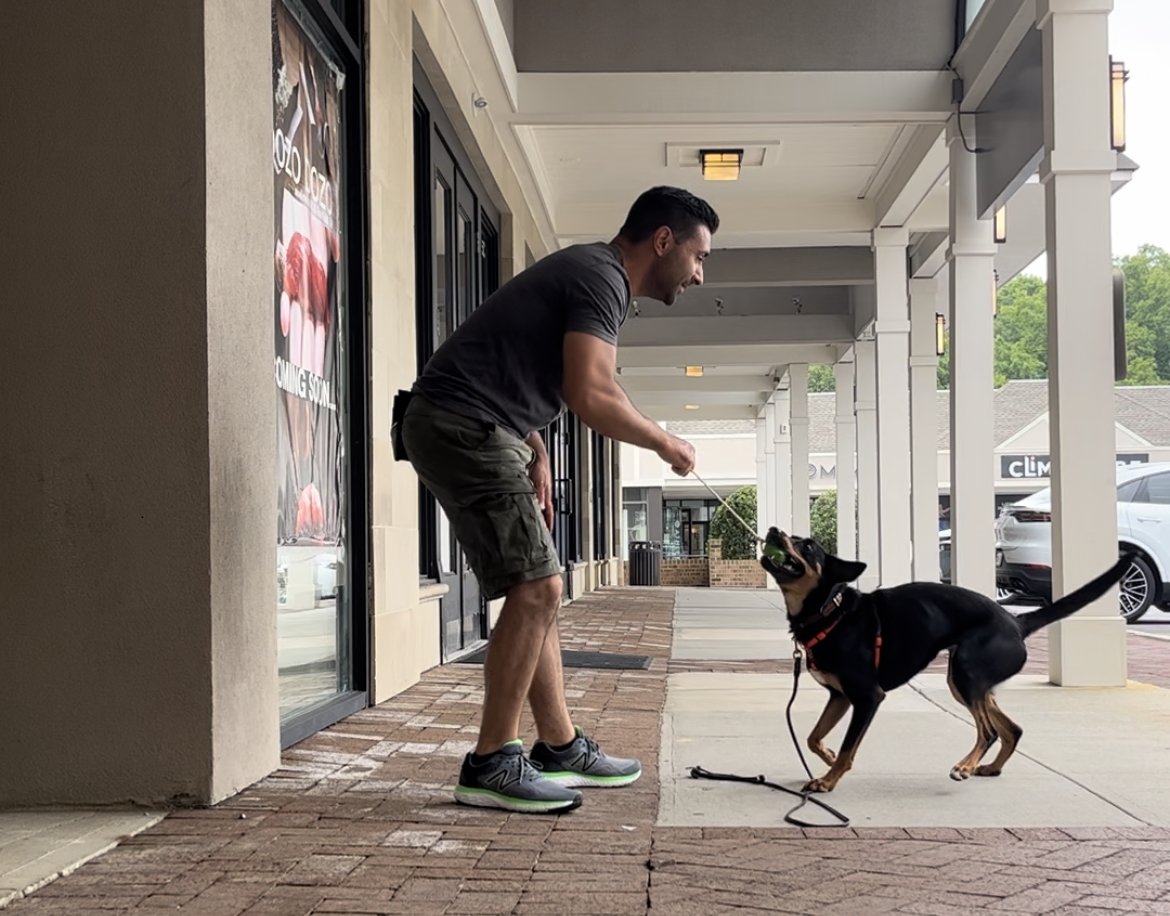
Quest and Anthony tugging.
HOW TO PLAY TUG SAFELY
Here are some important points about how to play tug safely. At the bottom of this list there are a few helpful “how-to” videos as well!
Safe Surfaces: Play tug on a surface that your dog can grip onto. Wood floors and tile are too slippery, especially for dogs who are strong tuggers. Playing tug on a slippery surface can be dangerous and cause a dog to slip, lose traction and cause injury. Use a surface that your dog can grip onto like a carpet, rubber flooring, concrete or even the lawn when it is dry.
Knowing “Drop It”: Most dogs do not need to know “drop it” when initially learning how to play tug. This is especially true for puppies. You can either use two of the same or similar toys so that you can trade one for another. Or the second approach can be playing until the dog lets go of the toy, at which point you can start having your dog chase the toy before allowing him to grab it again. There are a few ways to teach drop it. This depends on a few factors: Option 1: While holding the toy with one hand allow the toy to become dead/limp and with your other hand have it holding the leash attached to your dog or holding your dogs collar to limit/stop their movement. When they let go of the toy use it to reward them again to play more. Here is a video demonstrating this. Option 2: You can teach drop it away from play. Though to be fair, sometimes this can be challeneging or not work because when playing with a dog they are generally more aroused and you may need to following Option 1. Anyway, in Option 2 you can watch this quick instructional to teach drop it around the house. Option 3: You can place a treat at the nose. Here is a video on how to teach this. I no longer like teaching it this way to be very transparent. This video is from 5-6 years ago. Some dogs end up not wanting the toy anymore because they become more interested in the treat.
Your Dog Should Do most of the Work: When playing tug, your dog should be doing most of the work. This means you shouldn’t be overly swinging your dog’s neck side to side or up and down, or dragging your dog around the room (unless your dog moves with you). Your dog should grab the toy when you present it and allow him to take it, and he should start chasing after the toy or grab it when presented. The dog should be the one doing most of the tugging, pulling and shaking his head side to side. Some dogs might need you to encourage them, as they may be unsure or not very enthusiastic about tug. For those dogs, encourage them by moving the toy around on the floor to make it look fun. Make the toy become alive to the dog. Pro Tip: If your dog is too nervous, fearful or not interested in playing tug that is okay! Some people force their dogs to tug when the dog may not enjoy it. This can put too much pressure on a dog, which could negatively impact the dog-owner relationship. Sometimes you may need to find other ways to play with a dog if they are not interested in tugging. For dogs that need encouragement and are a little nervous, take a look at this video of how I am tugging with Penny. Penny is a bit nervous outside on walks. Tug was used as a way to help her build confidence and have some fun on her walks. Notice how I gently pull and run with her to encourage her to play. As a dog
Fighting / Wrestling: Some dogs enjoy fighting and wrestling in the game of tug. This might involve pushing the dog around, presenting the toy and as the dog goes for it pulling it away and having them miss it, getting on the floor and “fighting” for it (if safe to do so). Here is an video example with Mango the lab who’s owners were having issues playing with her. There are more videos of different ways to play down below.
Use a Toy That Your Dog Will Enjoy: Some dogs will tug with every toy, while other dogs will only play with a specific toy. You might have to do a little searching to figure out what your dog likes tugging. To learn more about tug and using play as a reward, check out this blog, which includes helpful videos.
Keep the Toy Low to the Ground: If a dog is super young, is a little nervous or have some potential physical issues (and only if safe to do so) you may need to keep the toy low to the ground. When dogs play tug they naturally keep their bodies low to the ground. You may see your dog's back end up in the air and the front part of their body lower. For dogs who really get excited and motivated to play tug, they may dig their front and back feet into the ground as they play. This can be a safer way to play to avoid injury for some dogs.
Side-to-Side Movements: When playing tug, your dog will naturally move his body side to side. You will also see he may get really into the game and start thrash or shaking his head side to side. This is naturally how many dogs play. I do not suggest shaking or thrashing your dogs head during play. If your dog does this that is one thing, but you shouldn’t be the one doing this as you doing this can cause injury.
Do Not Let Go: Many people let go of the toy when their dog is pulling too hard or because they might find it funny to watch their dog fall back. However, letting go of the toy could result in a very steep vet bill, because you can injure your dog by letting go while he is forcefully tugging. Try letting go of the toy when your dog is not intensely pulling back.
Let Your Dog Win! You have two options when you decide to end your game of tug. You can say “all done” and remove the toy or you can allow your dog to win the toy by saying “you win” and allowing them to run off with it. I like doing a mixture of both when I play.
Important Disclaimer: Avoid playing tug with dogs who have cervical spine or neck issues as this might worsen the problem or cause additional issues. If you cannot avoid playing tug with a dog with cervical or neck issues, then use a toy that is shorter in length so that your dog cannot pull as hard and to minimize the amount of movement such as shaking the toy side to side. Remember to also keep the toy low to the ground when playing.
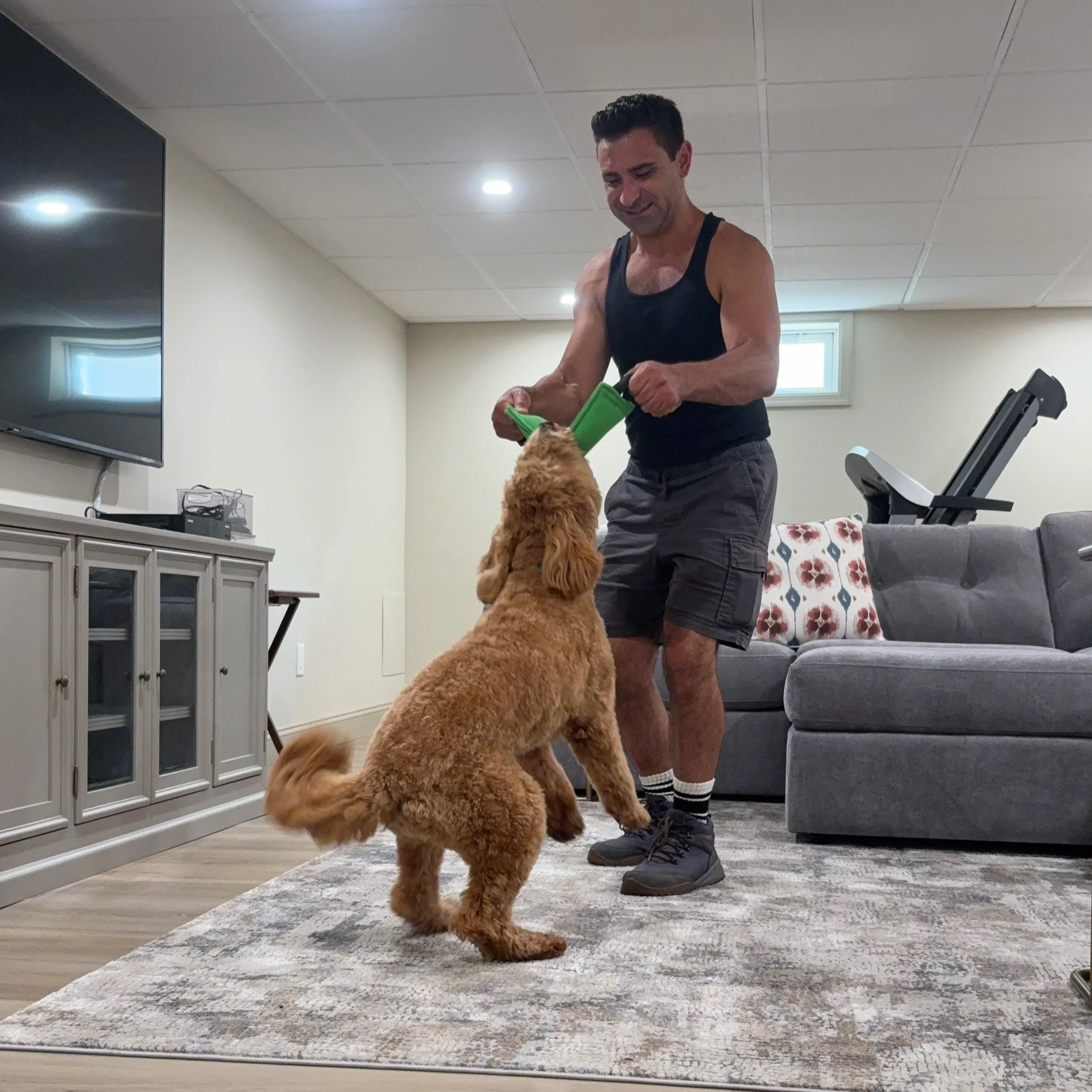
Hudson and Anthony playing tug.
Helpful Tug Video's
*Below are a variety of videos on playing Tug. As I have grown as a trainer, I have developed new play skills from when we first posted this blog in 2020. You will notice some of the ways in which I play with the dogs are different from the original video I made with Journey. There are a few ways to tug and play, and finding what way is better for each dog is what is most important.
To learn more about how to tug with your dog and develop play skills with your dog you can reach out to me to set up an in-person or virtual training session.
Tug Tips for Safety with Murphy
Safety Tips when Tugging with Chester
Playing Tug With James on the floor. (*Video of playing with a small dog!)
How To Play Tug Safely (This is the original video when we first wrote this blog. You will see the style of tug here is different then some of the newer videos as I have changed and developed new skills as a trainer. In many of the new videos you will see I am more animated and playful with the dogs.)
Using Tug to Build Confidence with Jinx
Using Tug As A Training Reward With Penny
Using Tug As A Training Reward With Journey
