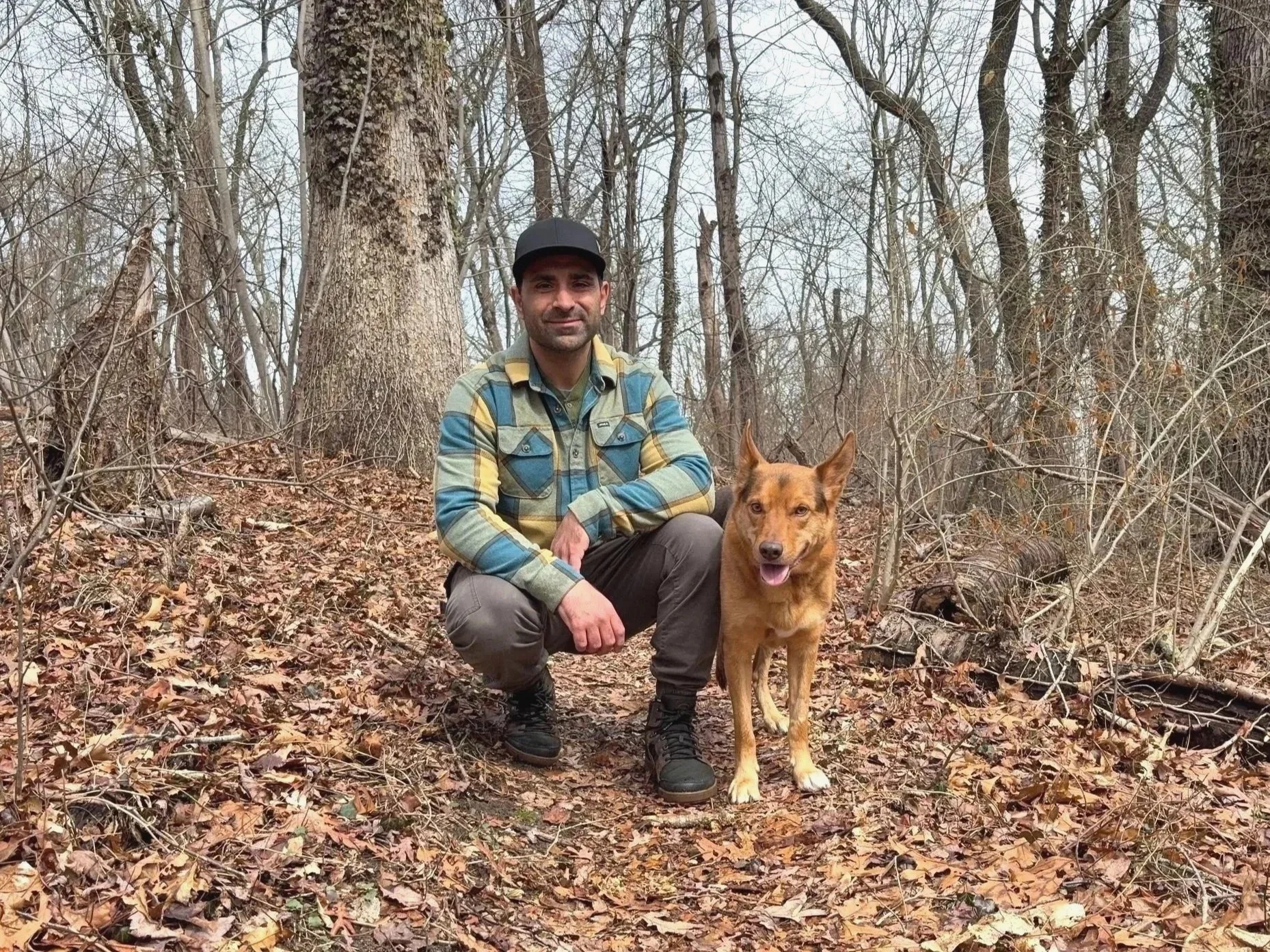
Tethered Cord Syndrome In Dogs – Part 2: Surgery, Post-Op and Current Life
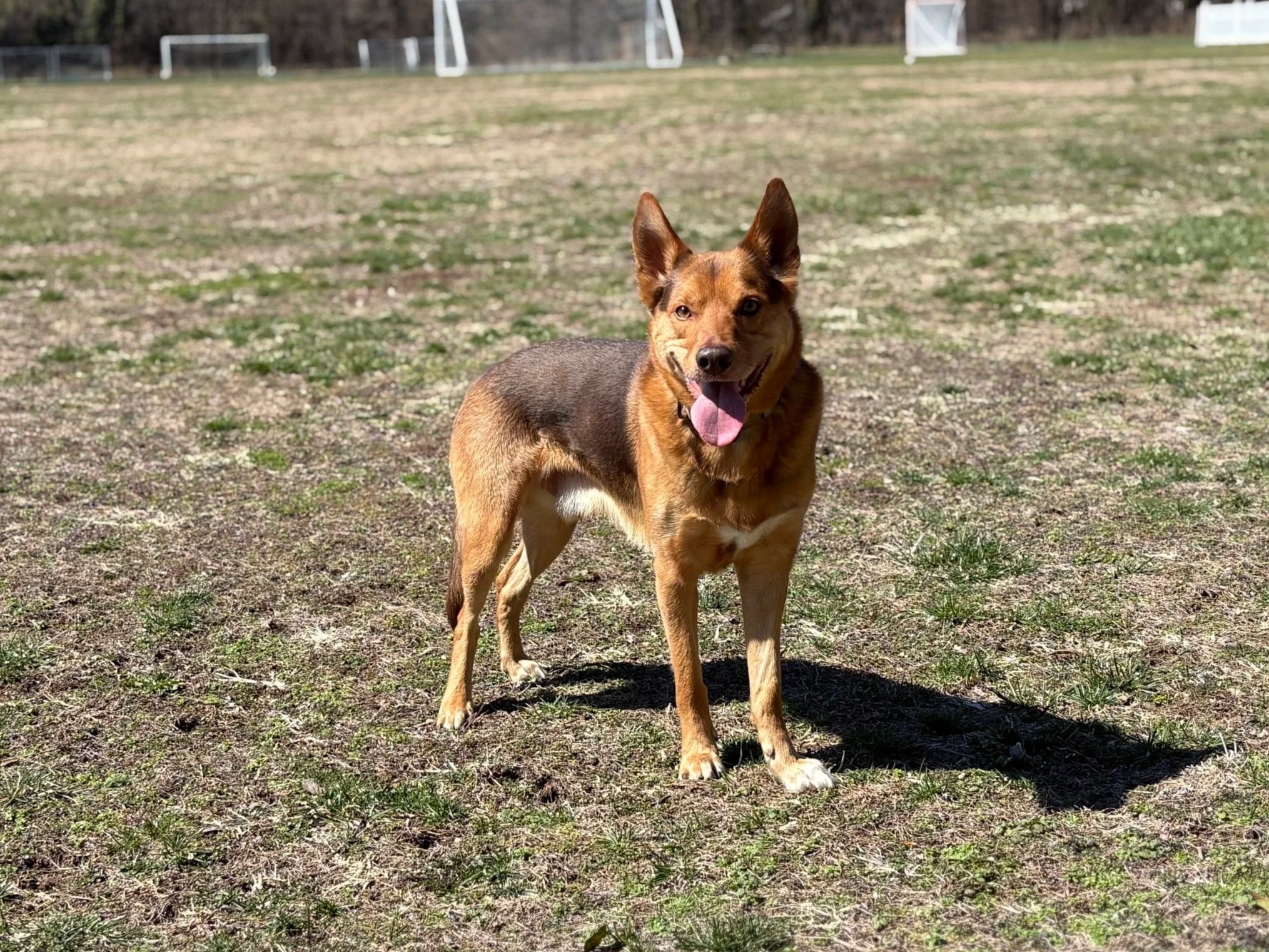
Journey off leash at the park - Spring 2026
July 1, 2026
By: Anthony De Marinis
When I wrote my original blog on Tethered Cord Syndrome In Dogs in 2022, I never expected it would reach the endless number of dog owners having similar struggles with their dogs. At the time, it was the first and only comprehensive blog and case study on Tethered Cord Syndrome in dogs on the internet. I honestly didn’t expect my blog to get the amount of traction it did, nor did I expect it to have the impact it has had in helping other dog owners figure out what was going on with their dog.
Over the past few years since writing my original blog, I have gotten countless emails, DM’s on social media and phone calls from dog owners across the globe telling me how much Journey’s story helped them get a diagnosis for their dog.
Since writing Journey’s story, many other dog owners and dog professionals have posted their own stories and case studies, which has given Tethered Cord Syndrome in dogs some traction and notoriety in the veterinary medicine field.
I am writing this Part 2 blog to thank and honor all those dog owners and dog professionals who fought to find answers to get a diagnosis and to those who have become advocates for this condition.
Before I begin, for those of you who are just finding this blog for the first time, you may want to begin by checking out my original blog, Tethered Cord Syndrome In Dogs (Part 1), to learn more about Tethered Cord Syndrome and my dog Journey’s story. With that, let’s get into it!
Where Is Journey Now?
Over the past couple of years, I have received numerous emails asking how Journey has been doing and where he is now. I have been meaning to write this blog for a while, but kept pushing it off to the side. But it is finally here!
In March 2024, around a year and a half after being diagnosed with Tethered Cord Syndrome, Journey underwent surgery to de-tether his spinal cord with surgeon, Dr. Elizabeth Parsley, who was the neurologist that initially diagnosed Journey at Tufts University.
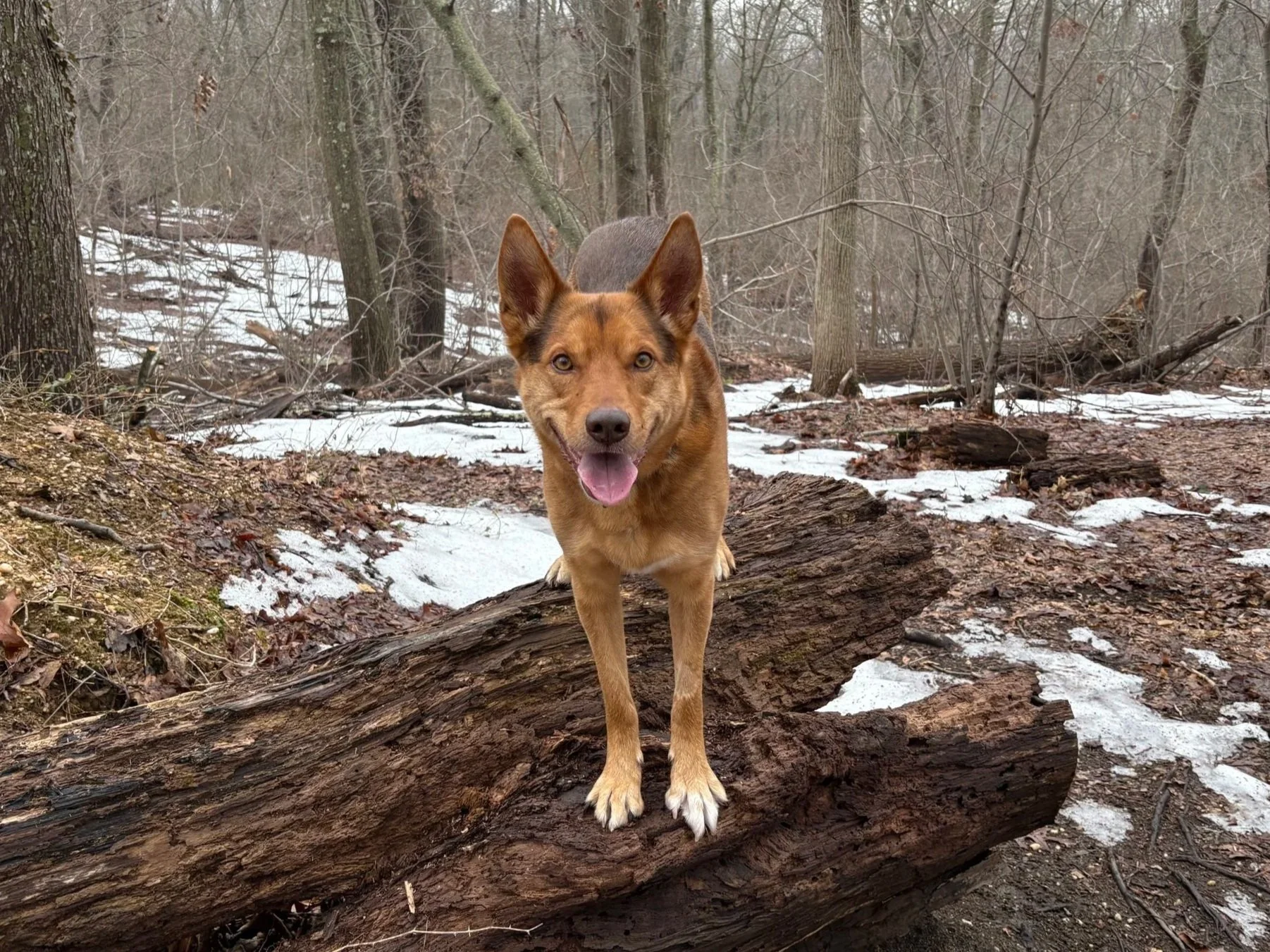
Journey hiking in the woods - Winter 2026
After Journey’s Diagnosis
After writing my original blog in 2022, I decided not to move forward with surgery. At the time, the reason for this decision was because Dr. Parsley had only performed the surgery for Tethered Cord Syndrome on about 6 dogs. I personally wanted to wait for Dr. Parsley to have some more experience with this surgery before deciding to do surgery on Journey.
Since Journey’s diagnosis, he was put on a medication called Pregabalin, which is a medication used to treat and manage neuropathic pain. This medication helped manage many of his uncontrollable episodes in his limbs, along with reduction in his pain and body sensations as you may have seen in the documented video footage from my first blog.
Aside from using Pregabalin to manage his pain and discomfort, I had continued physical therapy exercises with him at home. I would also bring him to the physical therapist about one to two times a month to get an adjustment as well as to get cold laser treatment.
I personally feel that a talented physical therapist can truly help relieve some of the pain and discomfort as Journey always seemed to feel better after a treatment. It was fascinating to see how much looser Journey’s body was and how much lighter on his feet he seemed to be after physical therapy.
However, about a year and a half after being diagnosed, I decided Journey needed surgery.
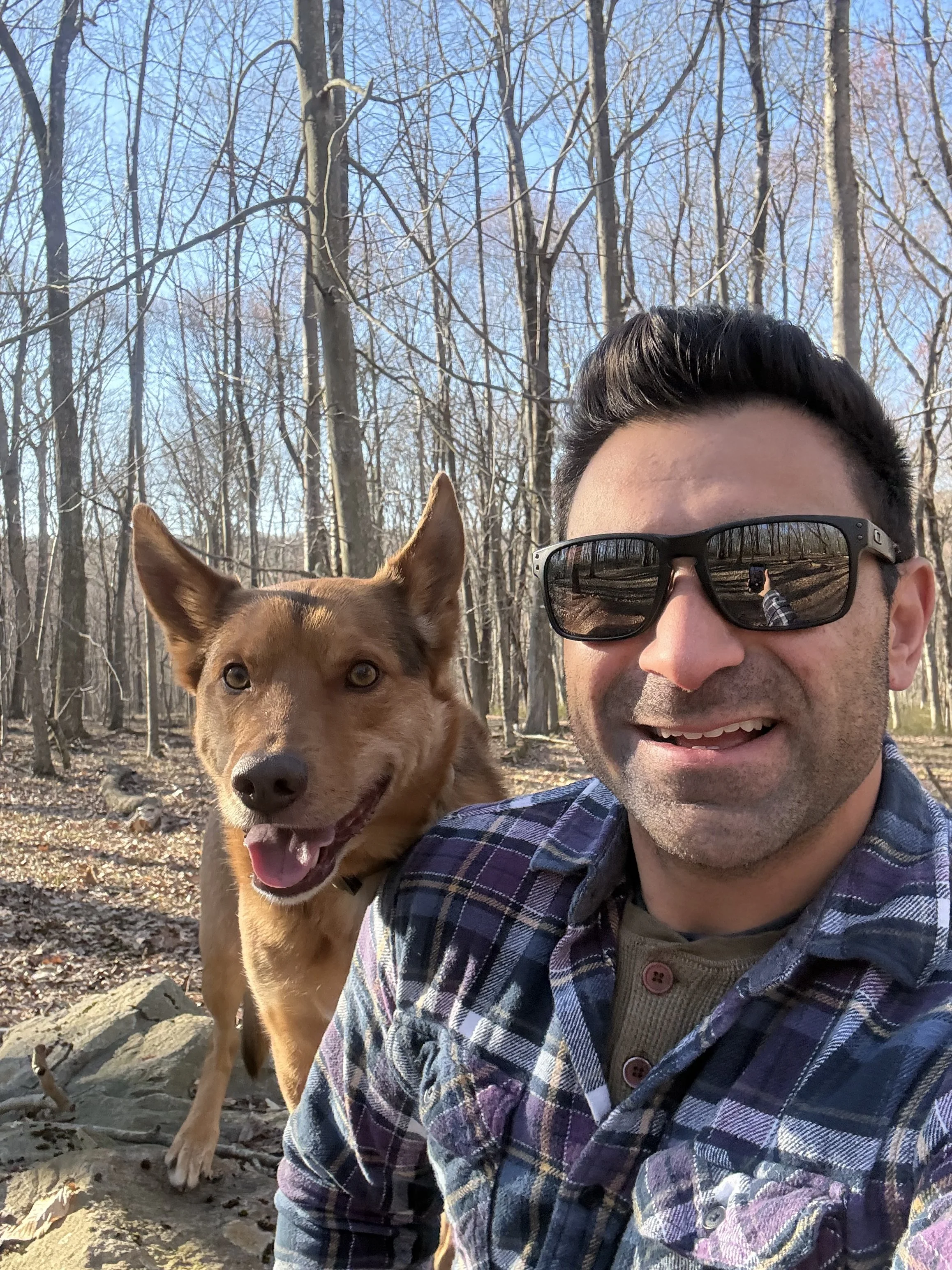
Journey and Anthony hiking in Westchester - Spring 2026
Why Did I Choose To Have Journey Undergo Surgery?
The waiting was over. Managing him with medication, physical therapy adjustments and exercises and cold laser therapy was no longer enough. The tethered cord finally started catching up to Journey.
My 5 year old dog was moving like he was a 10 year old dog. He was stiff, the medication wasn’t working as well, he was in more pain, he physically was slowing down and he would still have those weird sensations and episodes where he would lose control of his limbs.
After activities like agility and sheep herding he would be sore and stiff the next day. This was also the case after playing at the park and going off leash hiking. It was getting to a point where he couldn’t enjoy everything that he use too. He was struggling to keep up and wasn’t able to do everything he once could. Again, as a reminder, he was only 5 years old. I even stopped doing agility with him and started limiting other activities he enjoyed because he started to struggle so much.
I also started thinking more and more about his future. If he seemed to have slowed down and aged so quickly since his diagnosis about a year and a half ago, what would he be like in the next two years and so on? This question started to get me more concerned.
I had kept in touch with Dr. Parsley and would occasionally have a follow-up appointment. By this point, Dr. Parsley had done about 15 surgeries on Tethered Cord Syndrome, which also made me feel better.
Surgery - March 2024
After consulting with Dr. Parsley, we decided it was time for surgery. If this surgery worked, it could really help him improve. Though I was nervous and apprehensive about it, I felt that I didn’t have any other options as Journey was declining quickly. Despite my best efforts with medication, physical therapy, having a workout plan and cold laser treatments, he was still declining. Seeing him like this started to concern me because I wasn’t sure if he was going to be able to live as long as he should for an otherwise healthy dog.
On March 12, 2024 Journey went to Tufts University for surgery.
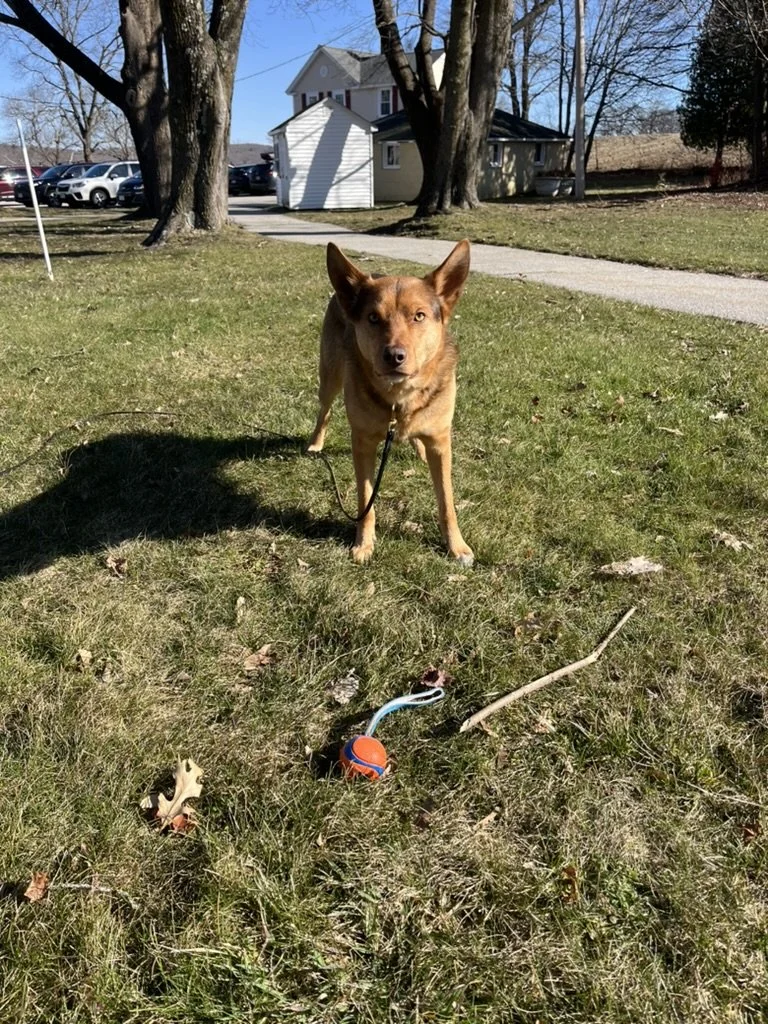
Some play moments before being dropped off for surgery
A Successful Surgery
Dr. Parsley said the surgery went smoothly and that it couldn’t have gone better. Journey stayed at Tuft’s to be monitored for 3 nights. Many dog owners have asked me if I was able to visit Journey while he was at the hospital recovering, and the answer is yes. I was given that choice by the hospital. However, I chose not to go see him and waited for the day of pickup instead. The reason was because I felt it would be more confusing for him if he was aware enough to realize I was there, potentially get him excited, only to then leave him again. I felt that would be more of a tease. The best thing to do in my head was leave him be until I was able to take him home.
I was nervous that he would struggle to move and walk on the day I went to pick him up. But to my surprise, when one of the vet techs brought him out, he didn’t seem like he was in too much pain. He was happy to see me. I had to grab him quickly to stop him from trying to jump up to say hello with all his excitement. After his hello and a quick bathroom break, I gently lifted him in the car, placed him in his crate, and we were on our four-hour drive back home.
Post-op and Recovery
I was expecting post-op and recovery to be very difficult. I was surprised to find out it really wasn’t so bad for Journey. I have heard stories of some dogs struggling during recovery, but this was not the case with Journey.
He was medicated appropriately to help him stay calm and relaxed. When we first got home, he seemed happy to be back. After getting him out of the car I took him in my yard to go to the bathroom and then took him inside my house and placed him in the playpen that I had setup for his recovery. I immediately sat down in the play pen with him to hang out and let him get settled in. He laid down and started chewing on a bully stick against my leg. I was happy to see this because he was comfortable enough to keep himself occupied.
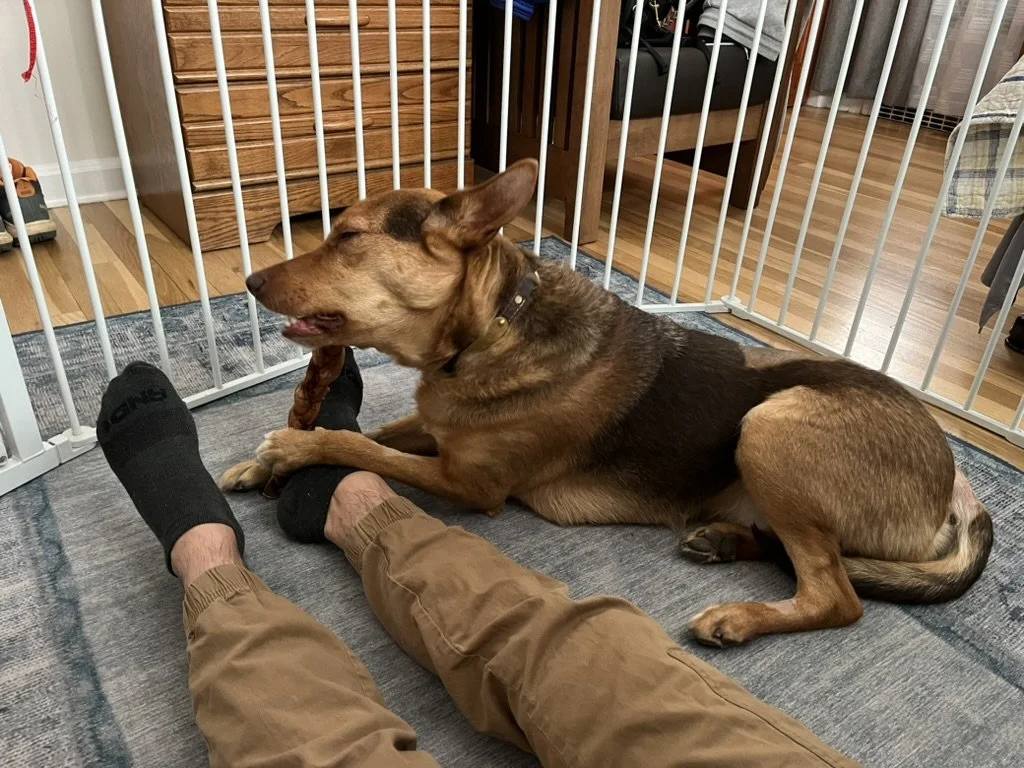
Journey chewing on a bone the first day back home from surgery
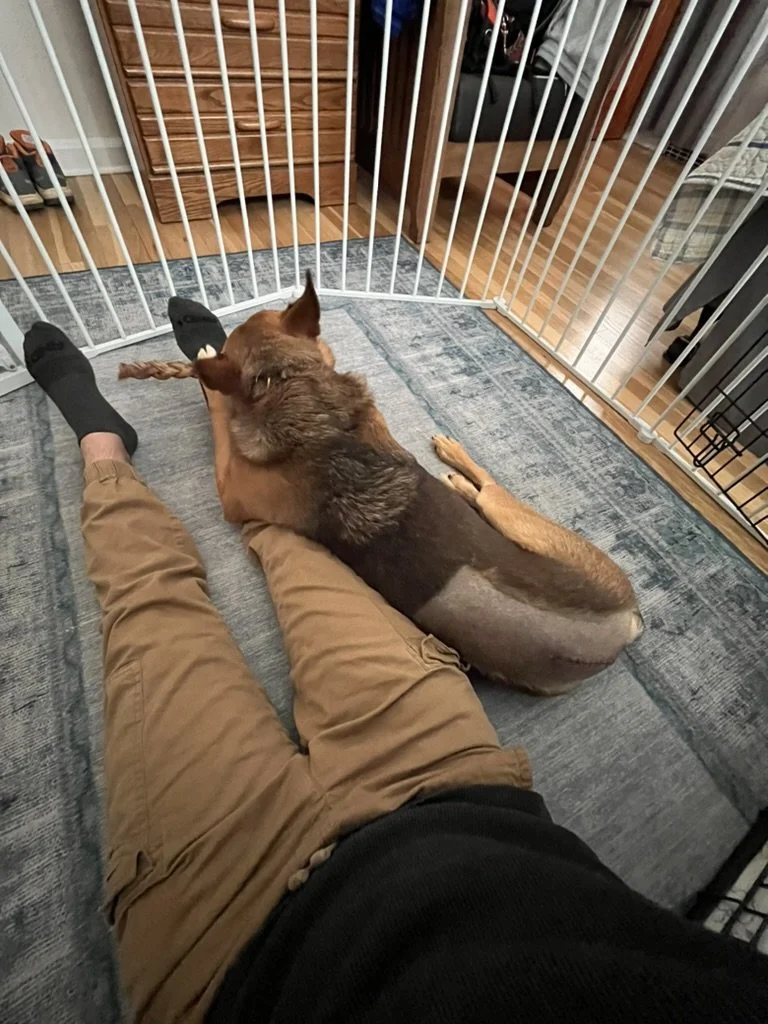
Journey chewing a bone the first day back from surgery in his play pen
Preparation For Recovery
I want to pause for a second and explain how I prepared my house for Journey’s return and his recovery because I have gotten many questions about this, and since I am tired of answering all the questions about it, I figured writing it all out for you would make it easier on me!
Multi Dog Households
If you have a second dog or multiple dogs, you need to consider how to manage them without it being an additional headache. I will explain further.
Firstly, my second dog, Quest, is crate trained and trained to be separated from me and other dogs when needed. Personally, as a professional dog trainer, I teach independence right away when I get a dog for a variety of reasons, including situations such as bringing home a dog from surgery.
If I am home and Journey is around my house or if I have a dog at my home for board and train or if I have family or friends visiting, I can have Quest, and Journey for that matter, crated anywhere in my home, as well as placed in a room with the door closed while loose without causing a scene. To me, this is an important life skill and in a situation where a dog is coming home from surgery, this comes in very useful and stress free for everyone.
Quest can also be calm on the other side of a baby gate, play pen, tether and in another room or part of the house without an issue. This made my life much easier for Journey’s recovery because she wasn’t stressed out looking for him or myself. However, for the first day back, because I had a long drive to and from Massachusetts, I left her with my parents so that Journey could settle in without being disturbed. When I brought Quest back home the following day, I didn’t let her see Journey right away as I wanted her to settle in first. When I did let her see him it was through a baby gate so that she could not enter the room and get herself and Journey all excited.
Play Pen and Crate
I set-up a play pen on top of a rug for easy traction for Journey in my bedroom as the primary place where he would recover. His dog bed and water dish were in there to keep him as comfortable as possible as he had to be limited in his movement.
When I would leave to go out to work, I would place Journey in a crate for additional safety and had a camera facing him so that I could check-in on him. I also had a play pen set-up in my kitchen space so that when I was cooking or spending time in the kitchen, he could be nearby and not feel secluded.
Here are links to the play pens and crate I used. Keep in mind that there are different sizes for play pens and crates based on the size of your dog and living space.
Metal Indoor/Outdoor Fence Play Pen
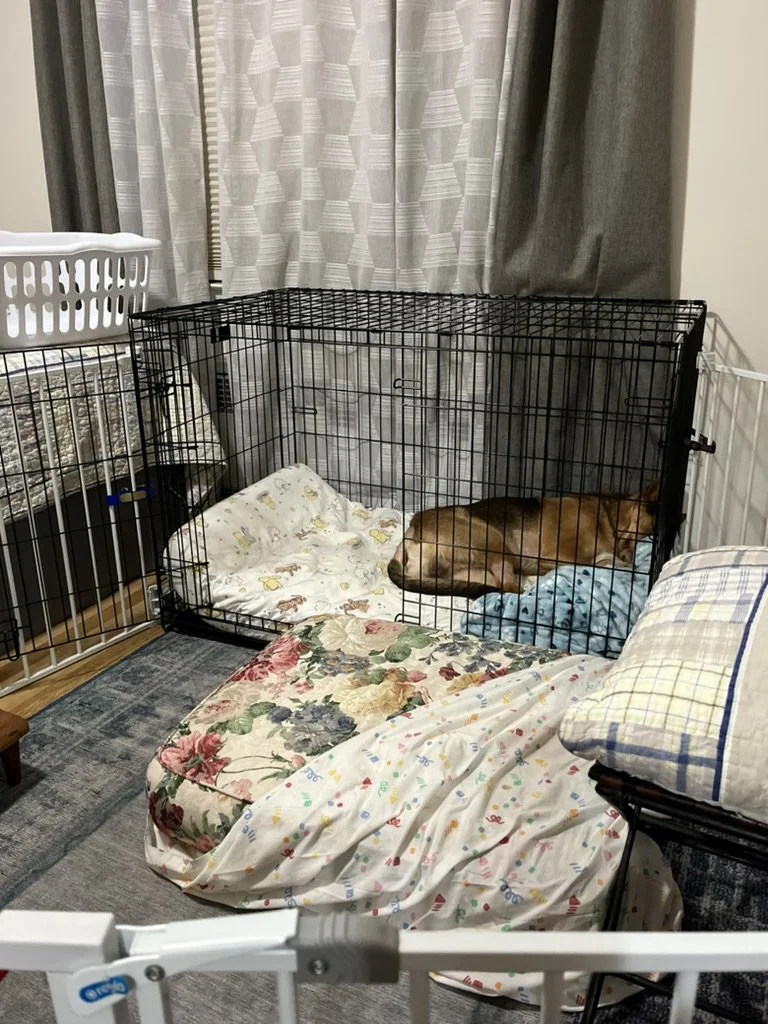
Nap time in the crate
Runner Rugs
One concern I had was getting Journey from his containment spaces to my back door so that I could bring him out to the bathroom. What I decided to do was purchase a bunch of runner rugs to make a path from his containment spaces leading to my back door. I literally had a path of runner rugs throughout my house.
This was so that I could safely walk him through the house without him slipping or losing traction and hurting himself since the floors in my house are wood, which can be slippery.
Here is the Runner Rug I purchased.
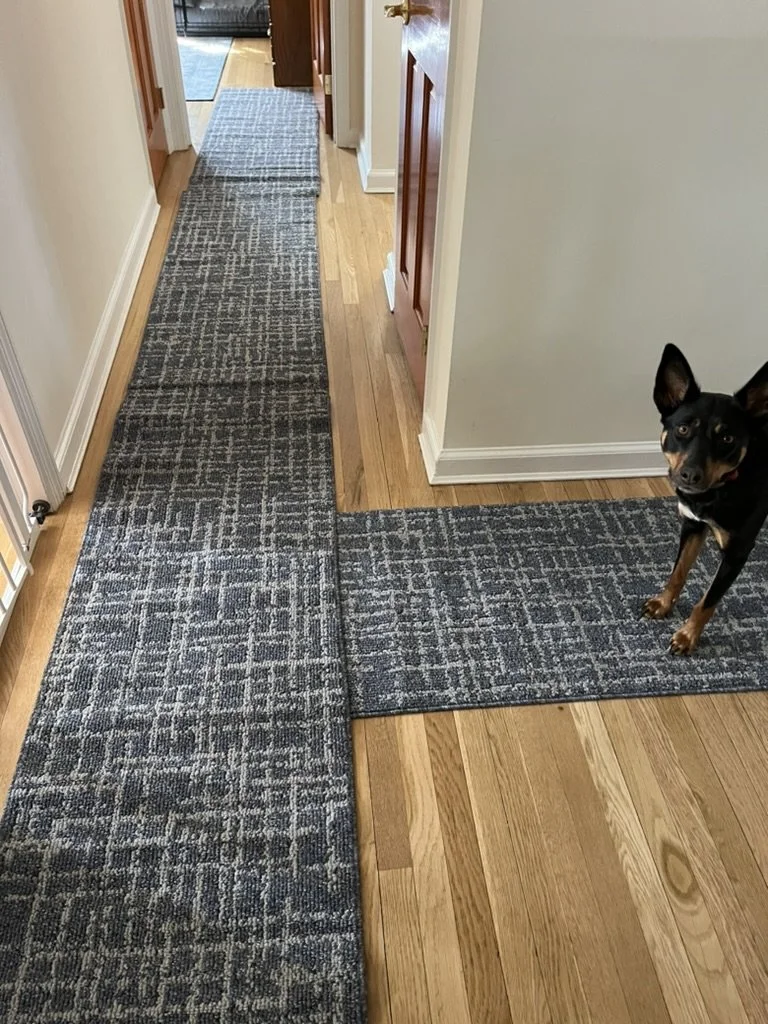
Runner Rugs set-up around the house
Help-Em Up Harness
Dr. Parsley suggested I also purchase a Help-Em Up Harness so that I could safely and comfortably carry Journey up and down the steps off my porch to bring him to the bathroom. I had to carry him up and down for three months as per the doctors orders.
Here is the link to the Help-Em Up Harness.
Pill Organizer
I was also told by one of the vet techs at Tufts, to get a medication or pill organizer so that it was easier to keep track of all his medication for the day and week. This was a great idea because I probably would not have thought about this. It truly helped me stay organized with all the medications he was on throughout the day and week.
This is the pill organizer I liked because it organized everything by the day and time of day.
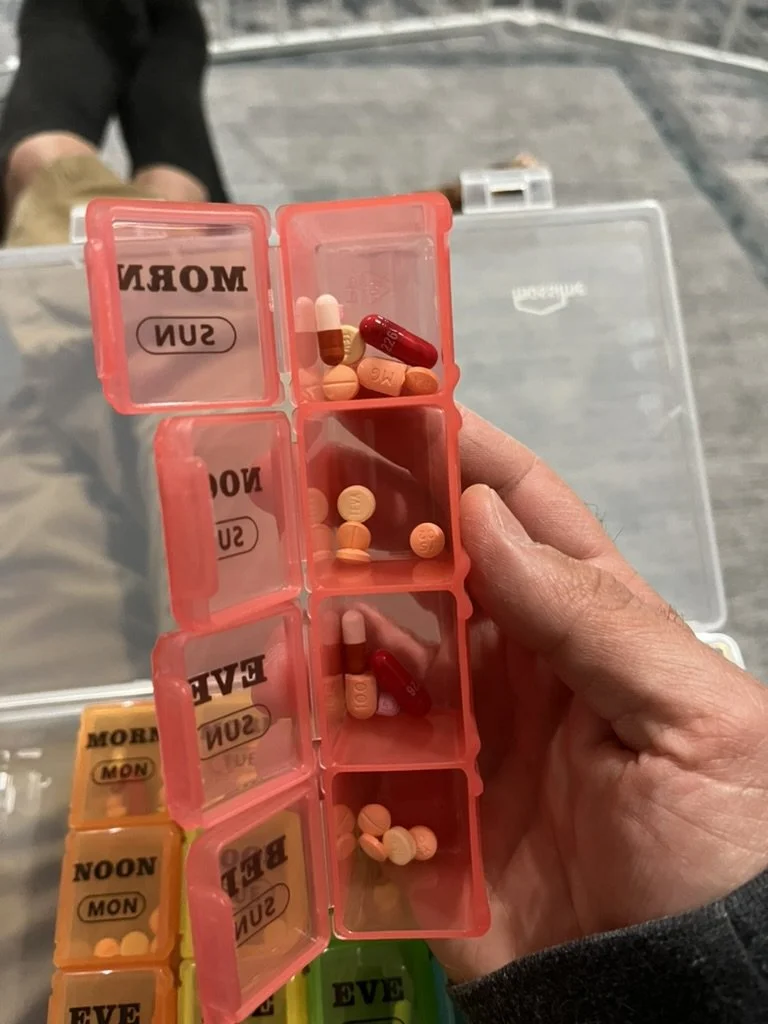
Journey’s daily pill organizer
Second Dog Introduction
After a day or two of recovery, I allowed my other dog Quest to be in the same room with Journey, but with a barrier such as the play pen so that she couldn’t make full contact with him and so that she didn’t try to play with Journey.
Luckily, because she is well trained, this was easy to manage and control. And for those of you who have multiple dogs and question whether training a dog is important, this is a great example and reason as to why training our dogs is important. Training a dog is more about preparing them for life. Living life with us, however we live, and potentially life with a second and third dog. Having Quest well trained made Journey’s recovery so much easier and stress free for both of them and stress free for me.
You will see in the video compilation down below, both dogs are in the same room. Journey is in his play pen and Quest is outside the play pen. Both coexisting together, minding their business chewing on bones etc. This is an easy way to get dogs to calmly hangout and start coexisting calmly without bothering each other or trying to interact with one another.
So dog owners ask if separating the other dog(s) is mean or will the other dog feel left out etc. Firstly, it isn’t mean, it is necessary. Journey’s recovery and safety had to come first, end of story. I wasn’t willing to risk it because he or Quest wanted to say hi and me ultimately feeling bad for them. That was the last thing I was concerned with. And once he was fully recovered, they had all the time in the world to interact and play. And secondly, if someone believes this is mean, personally I am ok with that. In my mind what is mean is putting your dog at risk of getting hurt or getting irritable towards your other dog during a time when they are not themselves and trying to recover from a serious surgery.
Limited Movement
In total, I managed Journey this way with limited movement, using the play pen, crate and Help-Em Up harness strictly for three months.
As far as exercise, I had to limit it for his safety. Too much movement, as I found out, can cause fluid build-up in the incision, which is exactly what happened about a week or so into his recovery. Luckily, he was able to be given medication to drain it rather than having to manually drain it.
Below are two photos of the incision. The first and second photo is the incision filled with fluid about a week after surgery. You can see the area is swollen and raised, when it should be flat. To compare, the third photo is what the incision looked like when Journey came home from surgery. You can see it is very flat compared to the first photo.
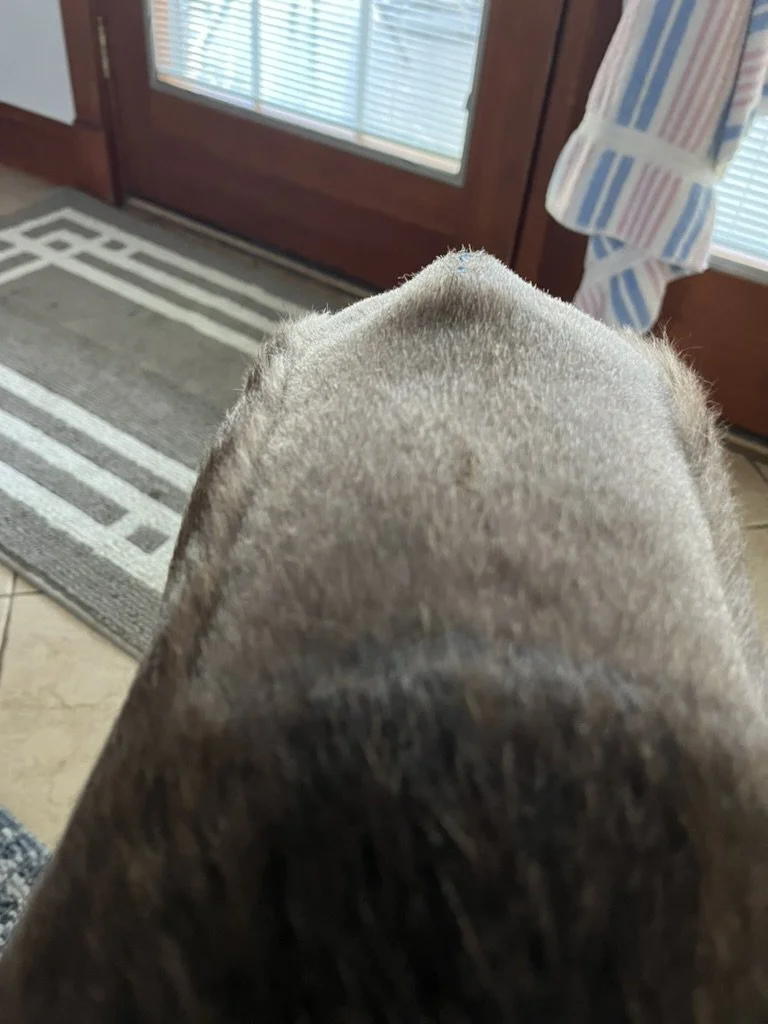
Journey’s incision swollen and filled with fluid
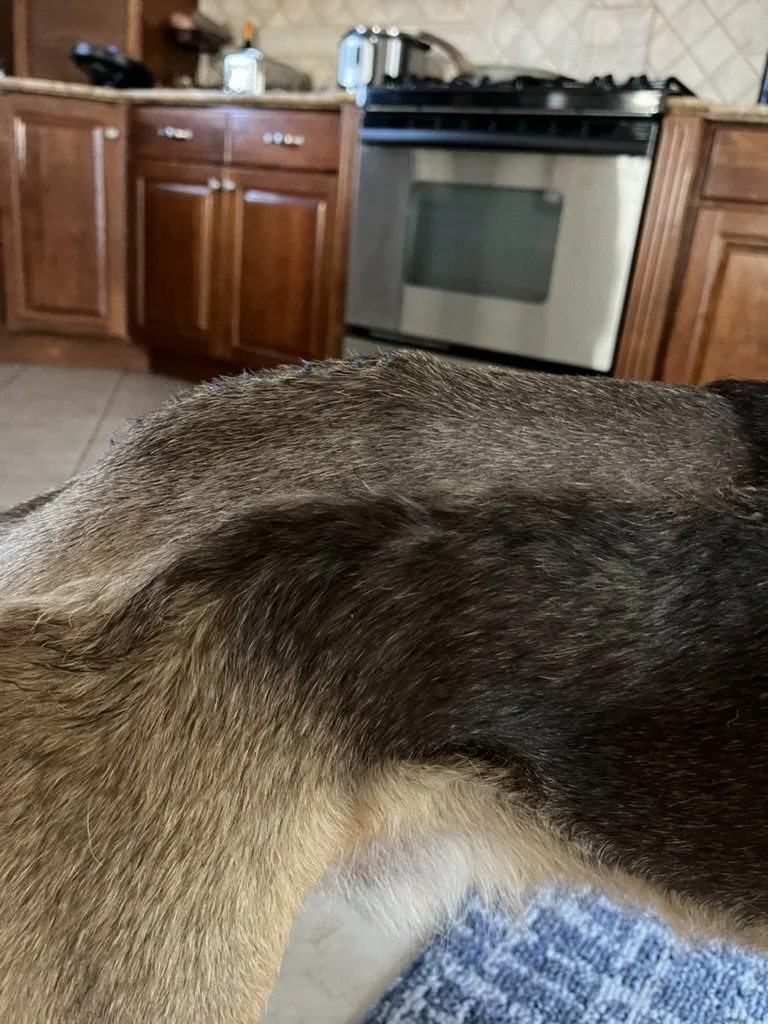
Side view of incision swollen and filled with fluid
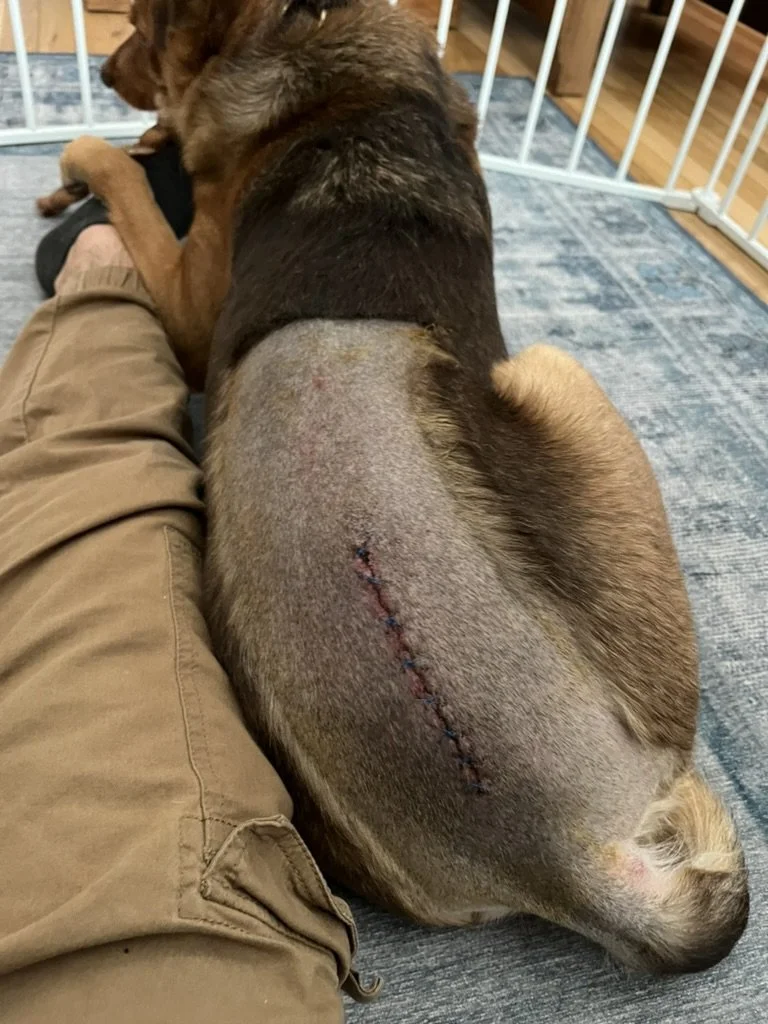
Journey’s incision prior to filling with fluid, the first day back home
Physical Therapy and Laser Treatment
As a side note, based on what I have been told by others who have also had their dogs undergo this surgery, some of the surgeons feel that limited movement is better for recovery, while others feel starting to move and begin some gentle physical therapy right away is better.
That said, Dr. Parsley wanted as little movement as possible for the first month. After the first month we were able to start at home PT with the help of Dr. Debbie Torraca from the Wizard Of Paws Animal Rehabilitation in Connecticut. Everything we did was virtual, which made it much easier for Journey and myself. Each day I had exercises to follow on my own with Journey, which I enjoyed because it was some nice quality time together.
We started cold laser therapy about a few days after surgery. I rented a cold laser from Dr. Debbie Torraca, which my insurance covered and eventually paid out so that I could keep the laser, which I still use today! I knew I wanted to use a cold laser to help Journey during recovery so I set it up so that it arrived a few days before he came home from the hospital.
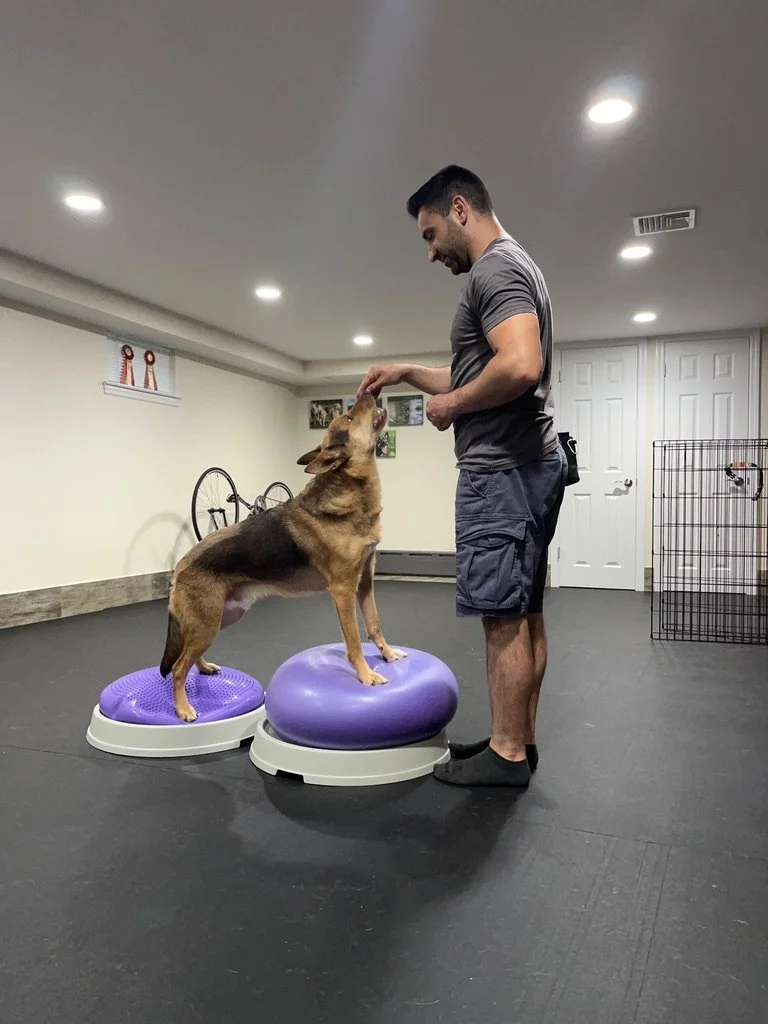
Physical therapy exercises with Journey
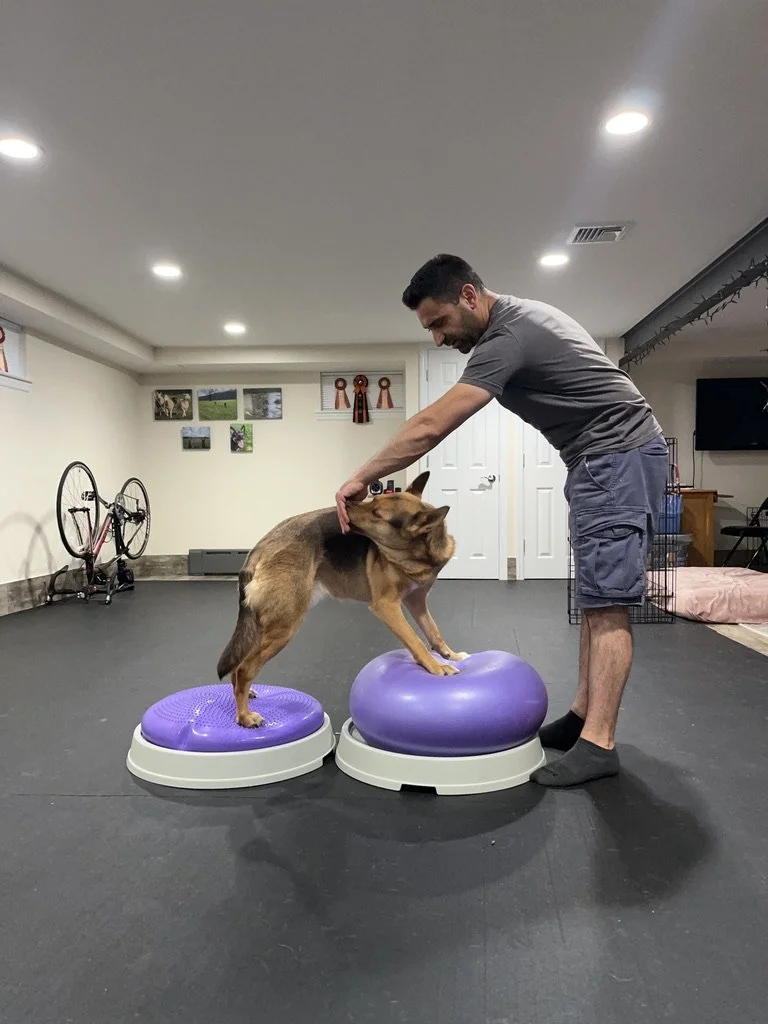
Physical therapy exercises with Journey
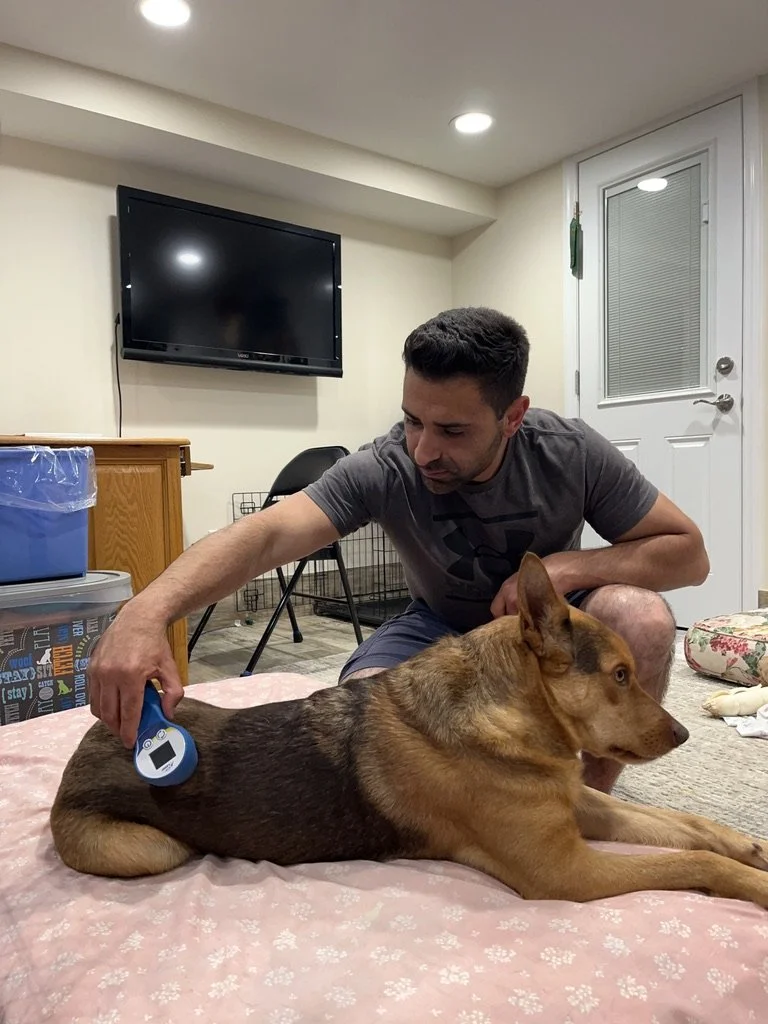
Cold Laser treatment
Photo’s One Month Post-Op
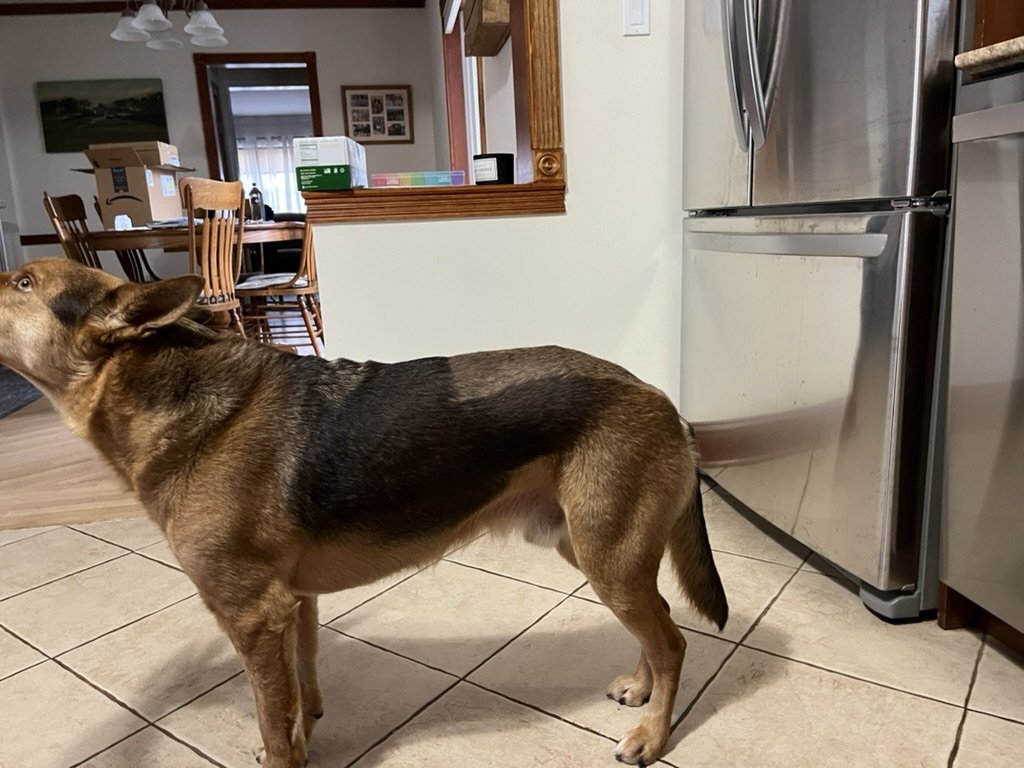
Side view of Journey standing
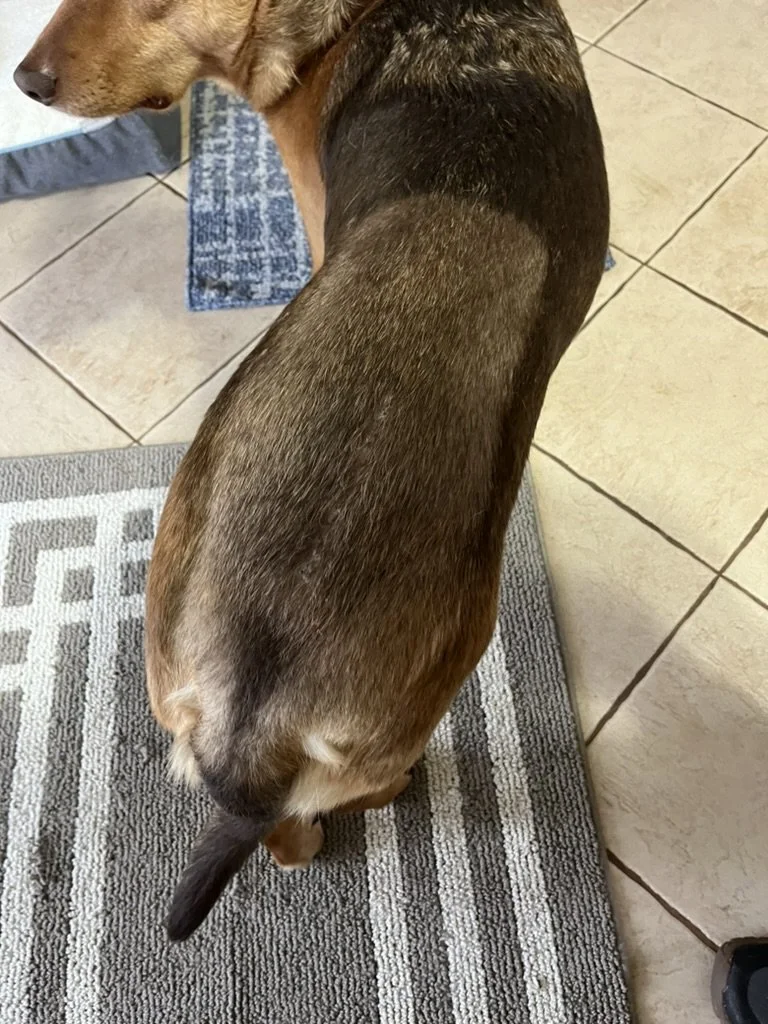
Incision site one month post-op
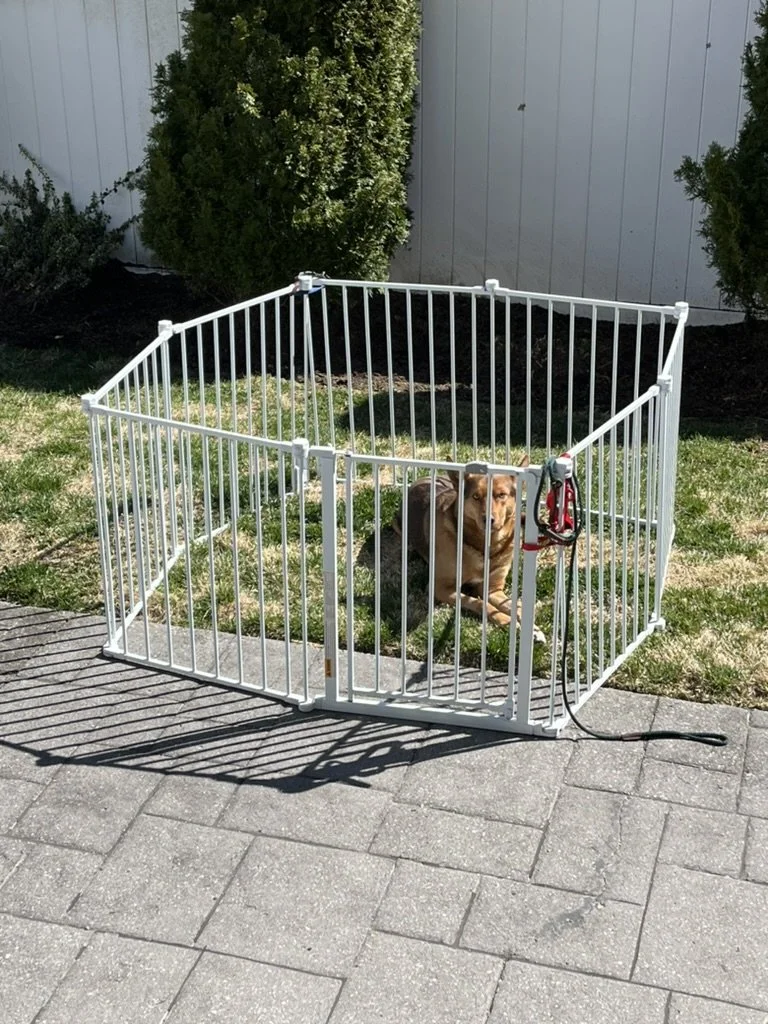
Journey relaxing in his play pen out in the yard
Three Months Post-Op
About three months into post-op everything was fine. Journey was enjoying his PT exercises. It became a nice relationship building routine for he and I since we could not do other activities we enjoyed together such as hiking, agility, off leash time etc. He was doing so well that I was able to start cutting back on his medication too. He also started getting more freedom around the house where he didn’t need to be fully confined and restricted.
Four Months Post-Op Recheck
At the four month mark I took Journey back to see Dr. Parsley for his recheck. She was happy with his recovery and gave Journey clearance to start being a normal dog again! He was allowed to officially be off leash, run around and swim. So of course that afternoon I took him to a field to have some off leash time.
We eventually got the green light to slowly start some other activities like agility at around 8 months post op. He was only allowed to do flat work, meaning low jumps and tunnels. The physical therapist and neurologist suggested waiting about a month to build some more strength and endurance before doing things like the A-frame, dog walk, teeter and weaves. He was so happy to be back at it which was nice to see.
How Is Journey Today?
Fast forward two years post-op, which is when I am writing this blog. Journey is doing so well. I wish I had done the surgery for him a lot sooner to be honest because it truly helped him so much.
The sensations that he would have as well as the loss of control of his limbs have basically stopped. Once in a while he will still have them, but nothing like before. It is so rare that I see it happen that I sometimes forget what it use to be like. Overall, he is way more comfortable and now at age seven, he is moving so much better, especially compared to prior to surgery.
There are three things that still randomly occur:
Trembling of his back legs and body when he seems to be a bit uncomfortable.
He will still sometimes sit on his rump with his legs either stretched out or facing all the way up towards the ceiling. The neurologist said this probably won’t ever go away as it could be part of how he stretches his back out when he feels uncomfortable.
His urinary incontinence improved after surgery too, though from time to time it fluctuates and comes back. As I am writing this, as of June 2026, his urinary incontinence has been the worst it has ever been, which started about two to three months ago. For example, he use to occasionally drop urine here and there, whereas now I can sometimes find multiple drips on the floor a few times a day. On occasion he has even urinated while sleeping. Currently, he has been taking a medication called Proen, a medication for urinary incontinence, which seems to be helping him. I recently tried reducing the dose as per the recommendation of my vet, but as soon as I did that, I noticed the urinary incontinence got worse. So we are still seeing what we can do.
Behaviorally he is more joyous, playful and overall just more comfortable in his own skin. He doesn’t run away from himself or act scared anymore as described in my first blog. Many of the behavior issues that I had mentioned are no longer much of an issue.
Journey is still on Pregabalin twice a day and will remain on it indefinitely as it seems to help keep him comfortable. As you may recall, he has been on this medication prior to surgery as it was a way to help manage his pain, discomfort and neuropathic issues.
He is able to go off leash hiking for extended periods of time without an issue. He can also do sheep herding and agility and not be in pain or discomfort the next day, which is a big deal compared to before.
I did however, decide not to continue agility for competition. After training him in agility for a year after surgery, it just wasn’t the same. He wasn’t as fast or agile and I decided it was just too much impact on his body that I didn’t want to put that type of pressure on him at this point. Here is a video of some agility training to see what he looked like in agility after surgery.
Before I decided to stop our competition training, we did compete once after surgery, which was a lot of fun. After that, I decided it was better to just focus on doing agility with him for fun and focus more time on enjoying each other company and making sure I did what I felt was best for his body rather than pushing him to hard or risking him getting injured. Rather than training to compete or achieve agility goals, I do agility with Journey as a fun activity. Since the two of us have always enjoyed agility, it is a way for us to spend time together.
Click Here to watch video of Journey the day I brought him home from the hospital to present day, summer 2026.
Some photo’s for a quick break before continuing…
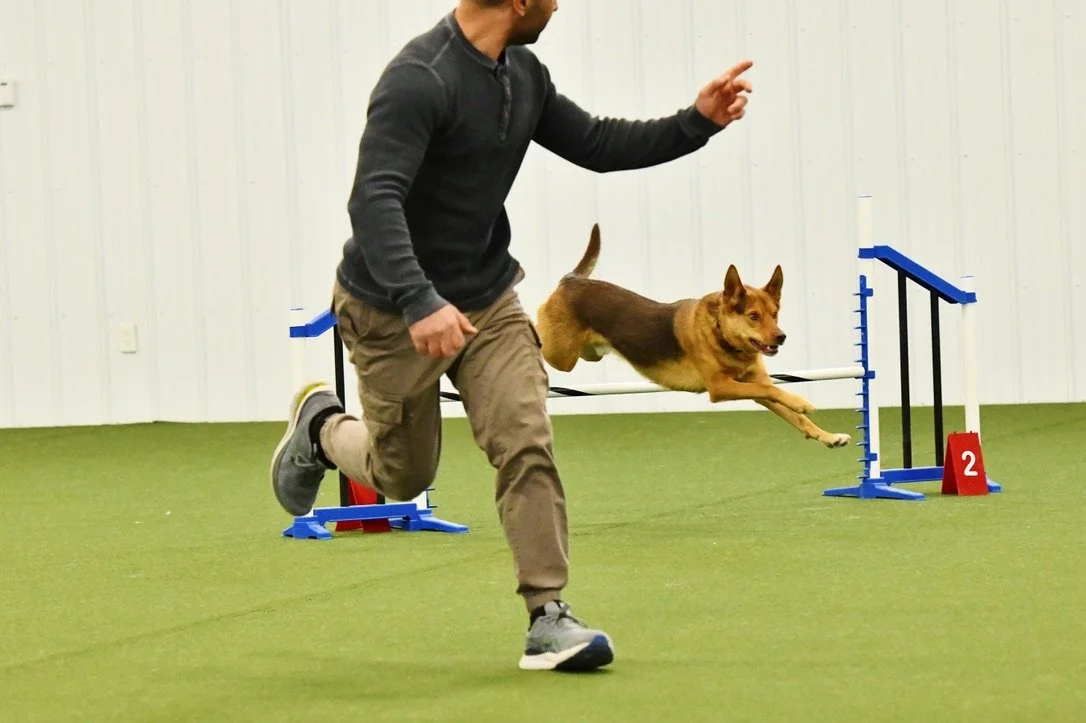
Journey competing in agility one year post-op
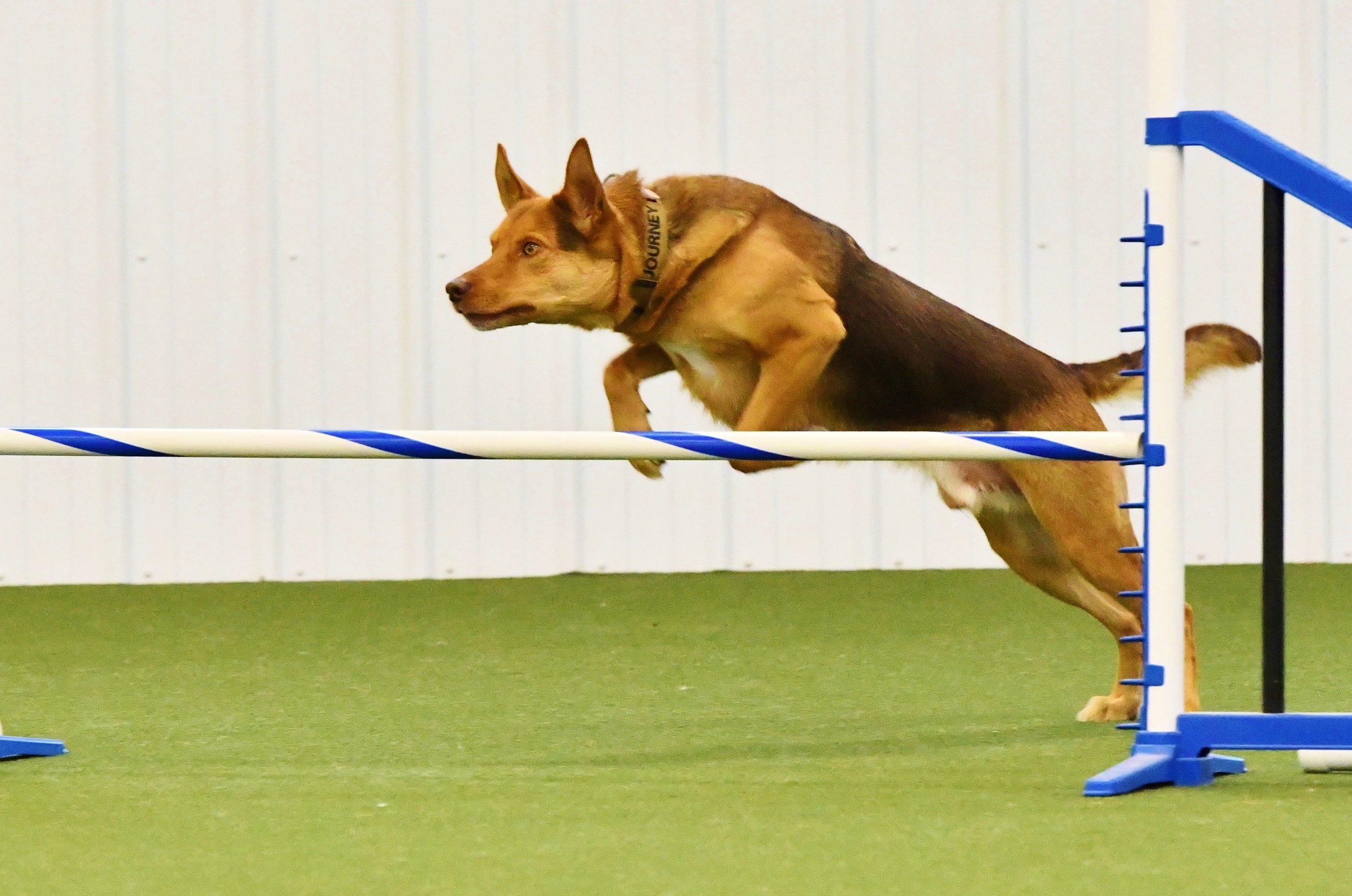
Journey jumping “prefered” at a agility trial
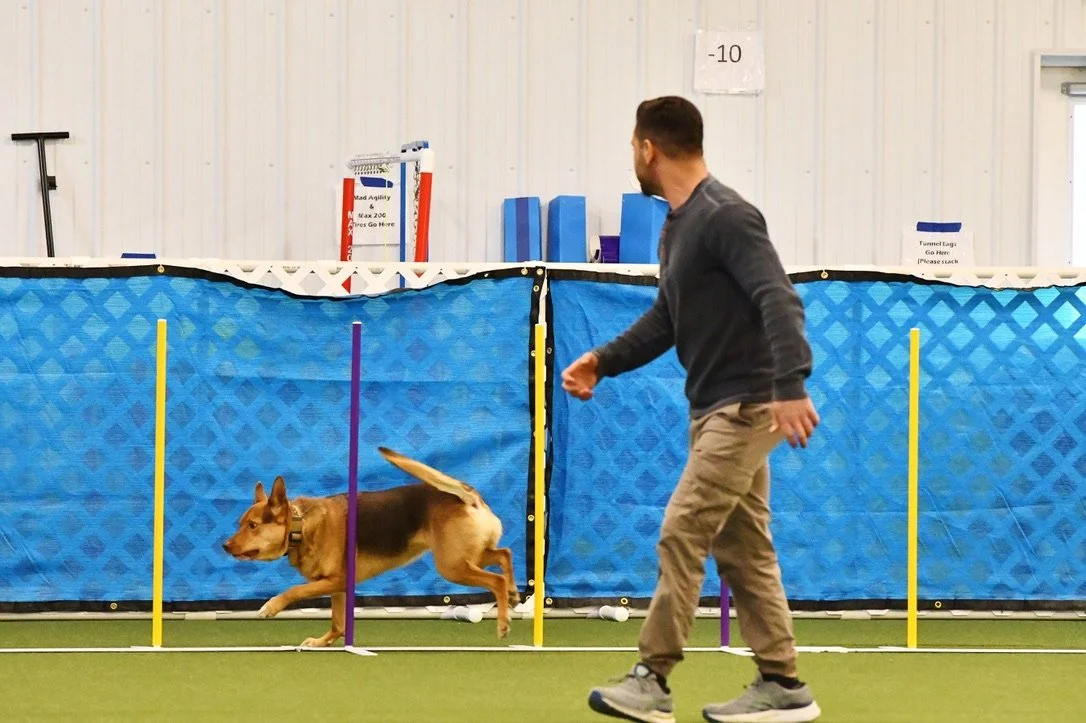
Journey doing weaves at a agility trial one year post-op
What Is Journey Up To These Days?
We now spend time training in Nose Work (scent training) as the sport to compete in. This was a great activity that helped Journey get through his post-op recovery stage as it didn’t involve any high impact on his body. We also slowly got back into sheep herding, which I wasn’t sure if he was going to be able to do again. But it turned out it was something that physically was possible and now as high impact on his body compared to agility. We have since competed in a few arena herding trials. I also take him off leash hiking and swimming which are activities he truly enjoys.
Photo’s Four to Six Months Post-Op
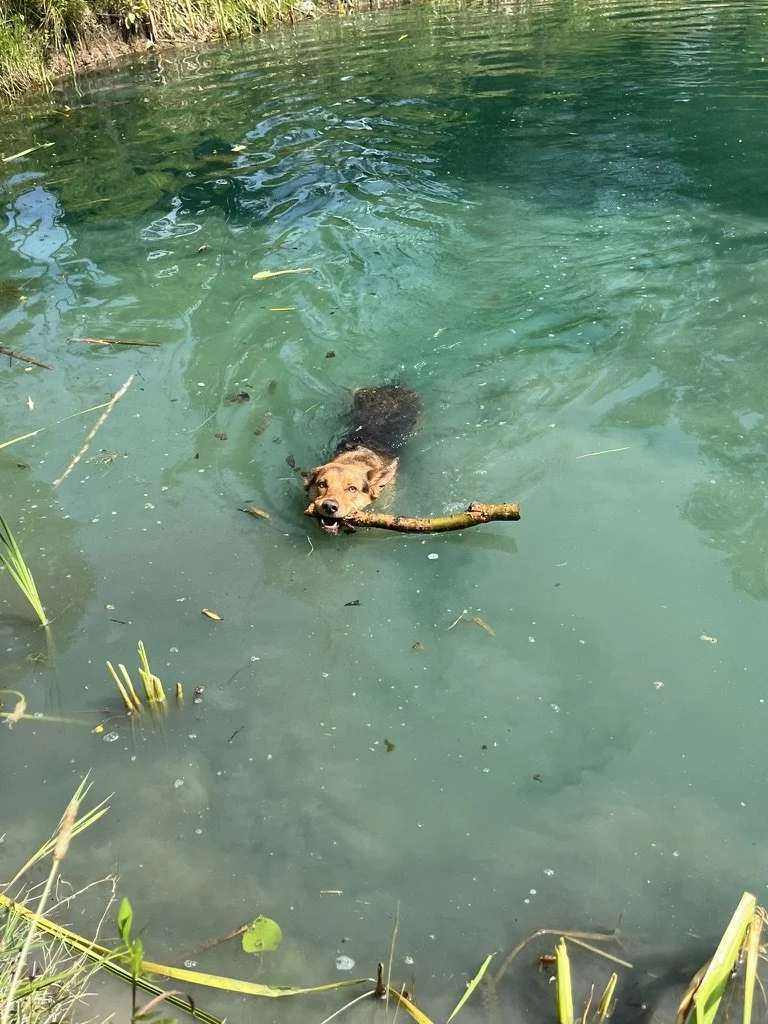
Journey first time swimming five months post-op
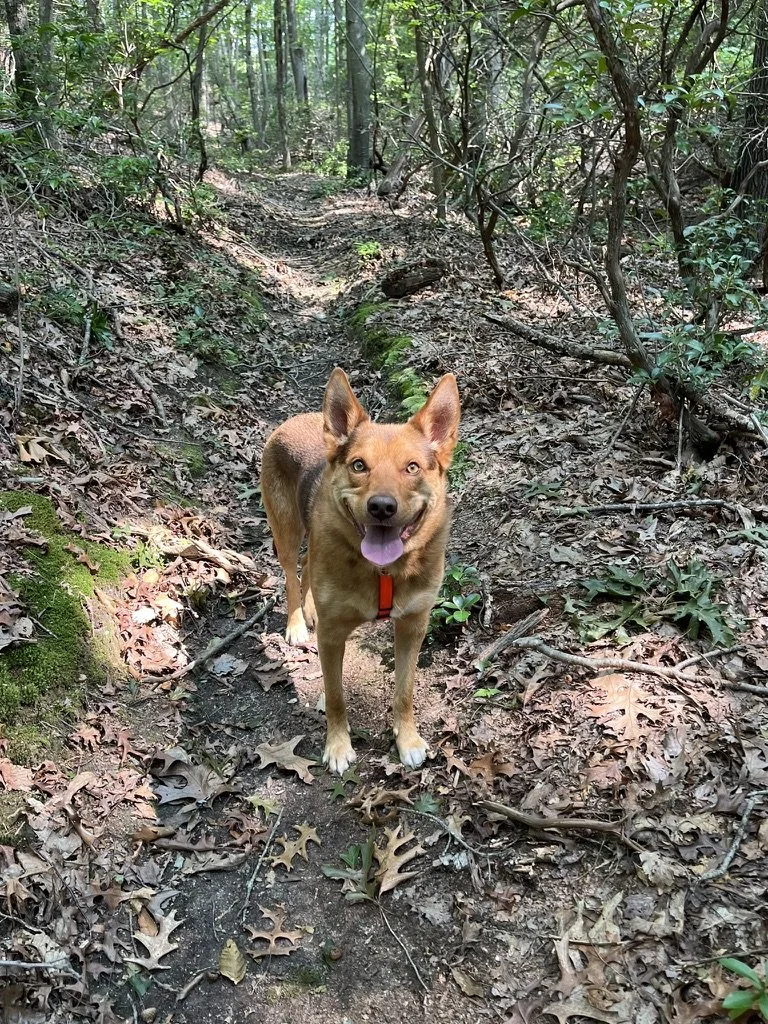
First time hiking off leash six months post-op
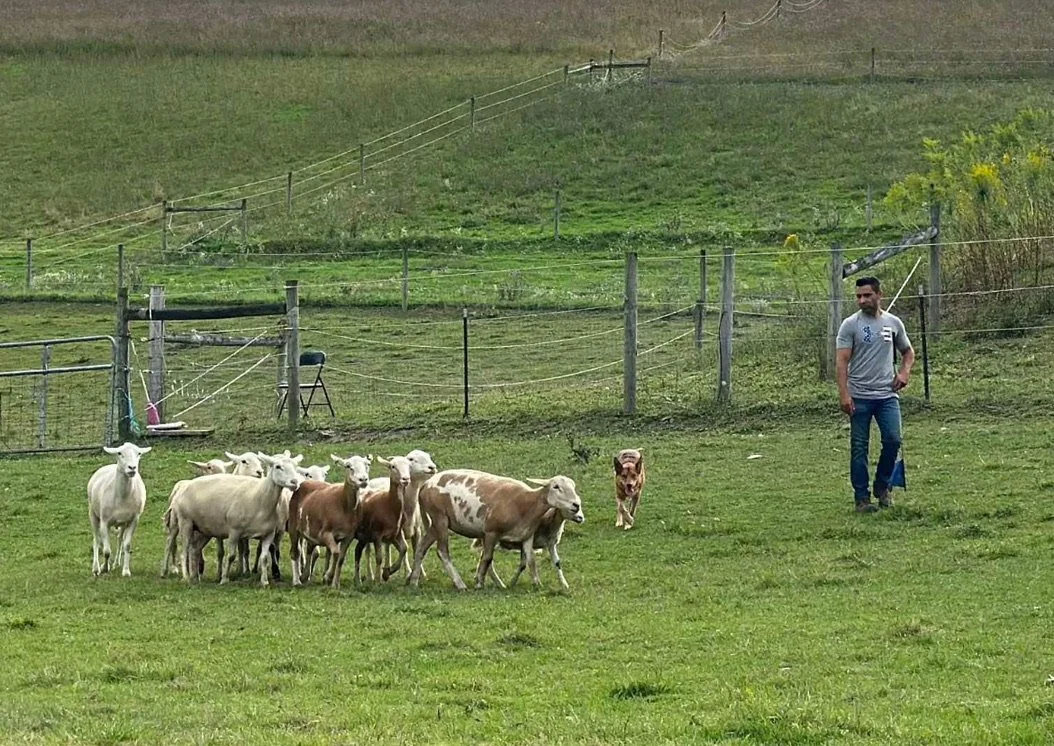
First time sheep herding six months post-op
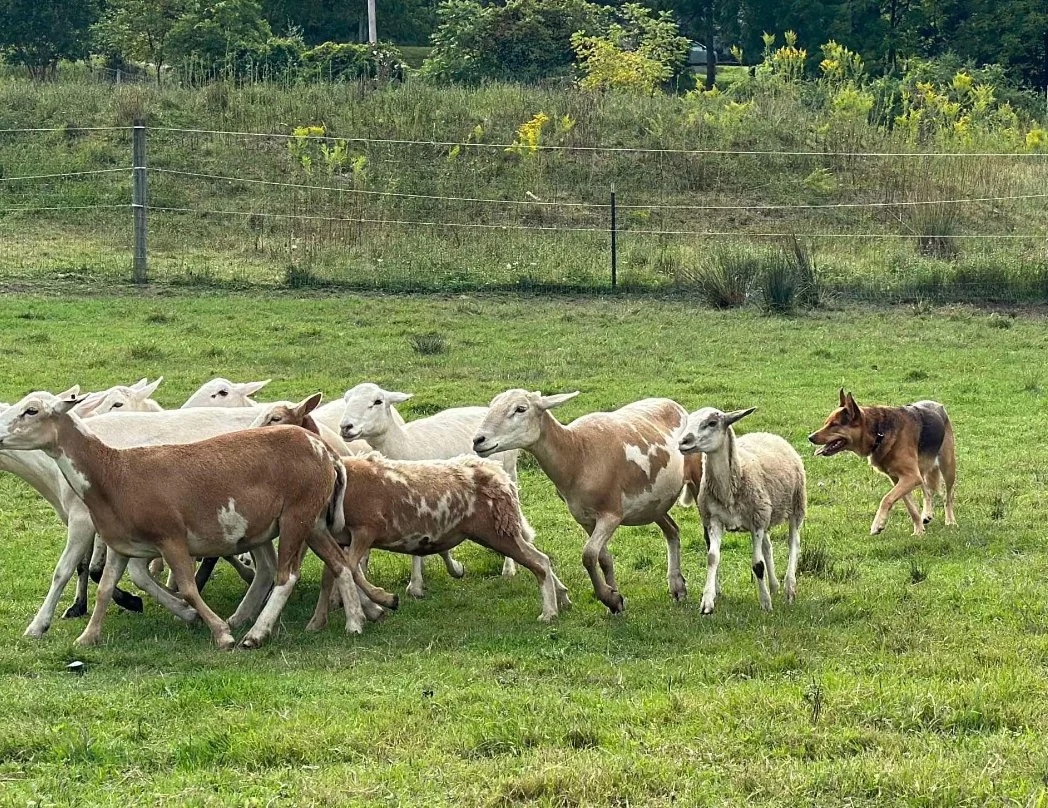
Sheep herding six months post-op
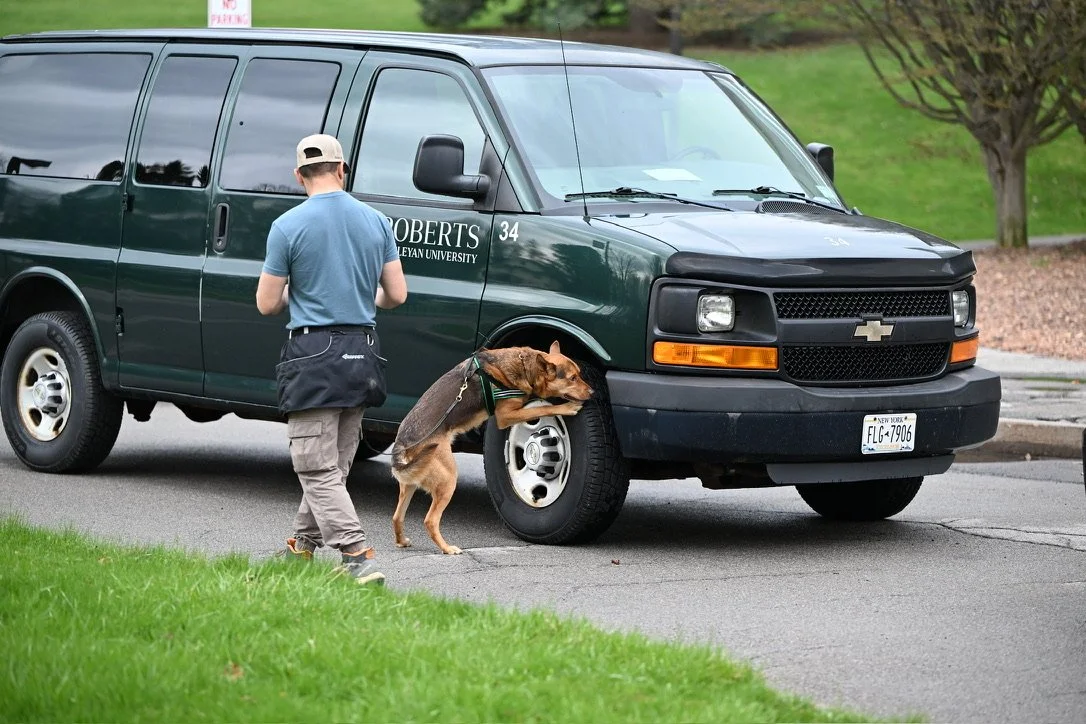
Competing at a nose work trial one year post-op
Would I recommend surgery for tethered cord syndrome?
For me, personally, I am happy with my decision to move forward with doing surgery for Journey’s tethered cord. I do wish I had made the decision sooner for him, but it is what it is and I am happy with where he is today and I wouldn’t trade any of it.
The two questions I get the most are “how was your dog’s recovery after surgery” and “how is Journey doing today?”.
Now that you have these answers, I also want to remind you that each dog truly is an individual with this condition. The symptoms and severity in which tethered cord syndrome affects each dog truly does vary. Some dogs with this condition are not as severe as Journey, while others have it much worse.
I mention this because the outcome for your dog may be better and/or not as good as Journey’s outcome. Furthermore, I know that the neurologists that do perform surgery on this condition have a couple of different ways or approaches to go about performing the surgery, which may also be a factor in how well the dog may or may not do afterwards.
Sport/Working Dogs
Lastly, and this is just a personal observation, based on the messages and videos I receive from other dog owners; I have found that the dogs that were bred for sport/work seem to recover better in general as their bodies are naturally more athletic. Again, this is just a personal observation I have made based on the videos, messages, and emails I have gotten the past few years from those who own purpose bred sport and/or working dogs.
Thank You!
I just want to say thank you! Thank you to those who have helped me on this journey with Journey! Thank you for all your help and support. And thank you to those who have reached out to check in on Journey.
I also want to thank everyone who has found my blog on Tethered Cord Syndrome In Dogs and for all the messages about how Journey’s story has helped them get their dog proper help, and in many cases a diagnosis. I never expected it to become so popular, nor did I expect it would be helping dogs across the globe.
Though I will admit I am not very active today in advocating for this condition or very involved in the community, this condition has developed a great community of dog owners and dog professionals who have come together advocating for this condition. THANK YOU to all of you who are doing this work! We are all truly grateful to you.
There is a great Facebook group and community that has developed through the advocacy work of Tethered Cord Syndrome in dogs, which is great because this means more dogs are getting help.
If you are interested in getting involved or join this community, here is a link to the Facebook group that has become quite popular the past couple of years.
Dogs with Tethered Cord Syndrome
If you are looking for helpful resources, articles, blogs and stories from other dog owners, vets, and more, check out this helpful link that was created by Katrina Drake, creator and admin of the Facebook group, Dogs with Tethered Cord Syndrome.
There have also been a number of dog owners and other dog professionals who have written blogs about their dogs story and their experiences with Tethered Cord Syndrome. You can find these stories in the document above, as well as in the Facebook group I just shared. Be sure to check them out!
Lastly, I will leave you all with some video compilation of Journey after his surgery, recovery and video of him today.
Video Of Journey Today!
Here is a video compilation of Journey from the day I brought him home from the hospital to present day, Summer 2026. Click Here To View The Video!
Follow my social media channels to see my training and adventures with Journey, Quest and my clients!
Additional Blogs By Anthony
Playing Tug Of War with your dog.